
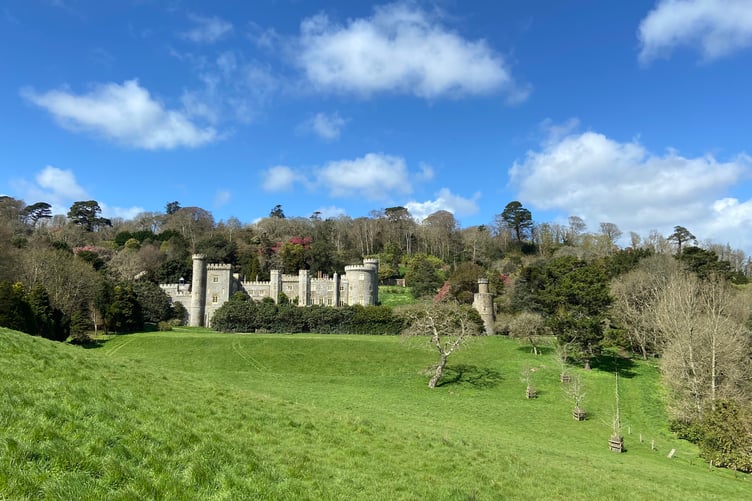
THE remarkable story of a Cornish country estate’s involvement in plant hunting and breeding has been told to members of the St Austell Old Cornwall Society.
The group, which is in its centenary year, heard from Charles Williams, of Caerhays Castle, who gave a talk at White River Community Church in the town centre.
A spokesperson said: “The society has been privileged to welcome significant speakers during this year. The latest meeting was treated to a fascinating talk by Charles Williams. After a brief introduction to the history of the castle and his family’s acquisition of the property, his talk concentrated on the work of his great-grandfather JC Williams and his partnership with the plant hunter George Forrest.
“The meeting was amazed to learn how many of the shrubs and plants that we now expect to see in the great gardens around Cornwall and, indeed, in our own, were introduced to Great Britain through the work of these two men and the skilled garden staff who developed not only the Caerhays estate but also the many plants within it.
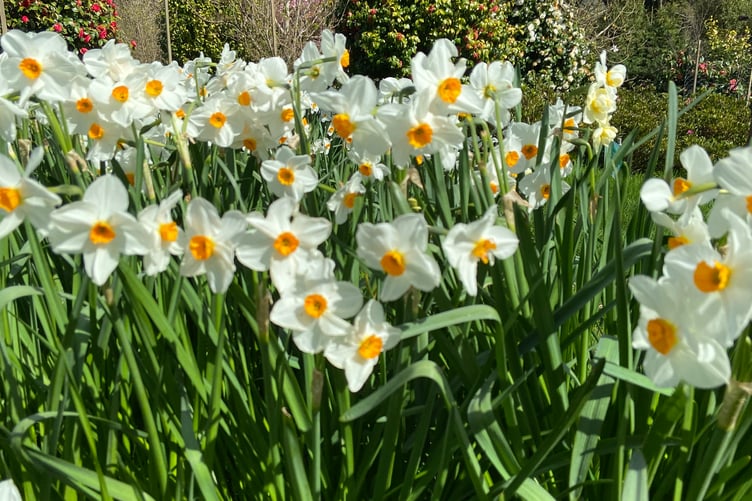
“JC Williams began breeding daffodils and developing new varieties. While this was a personal passion, there was a practical purpose behind this effort, as Williams was intending to create a new cash crop for his tenant farmers who were suffering a slump in agriculture. This flourished throughout Cornwall and the Isles of Scilly.
“It takes seven years for a new variety of daffodil to flower so as Charles Williams commented, ‘This endeavour was not for the faint-hearted.’
“But an even more speculative and dangerous endeavour was just around the corner. Ernest Wilson and George Forrest worked with JC Williams during the late 19th century and early 20th century. At this time, much of China was still feudal and local communities were both warlike and suspicious of foreigners. Purchases in preparation for the expeditions included rifles and handguns!
“Plant hunters collected seeds which were wrapped in wax paper and shipped in wooden boxes. A photograph shows many of these destined for JC Williams. The plant hunters, especially Forrest, followed the Yangtze River up into the mountains and collected many plants, now familiar, which were almost entirely unknown at the time. Further development and hybridisation from these original plants has produced the varieties we know today.
“There are now over 650 species of rhododendron, more hardy and long flowering than the originals. Camellias were known from Japan, but only as indoor plants, cultivated in heated greenhouses on the large estates. By crossing them with varieties from the mountainous regions of China, the camellias we know today were developed as outdoor plants.



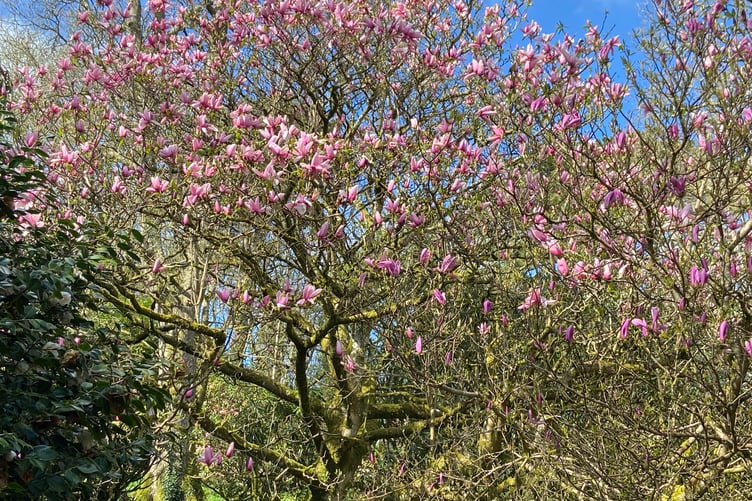
“Activity continued throughout the First World War, despite JC Williams suffering the terrible loss of three sons in the conflict. Magnolias were first brought back to Caerhays and the first one ever to flower in the United Kingdom did so on that estate in 1918.”
At its next meeting, St Austell Old Cornwall Society will welcome Dr Joanna Mattingly to speak on Cornish churches.
Comments
This article has no comments yet. Be the first to leave a comment.