
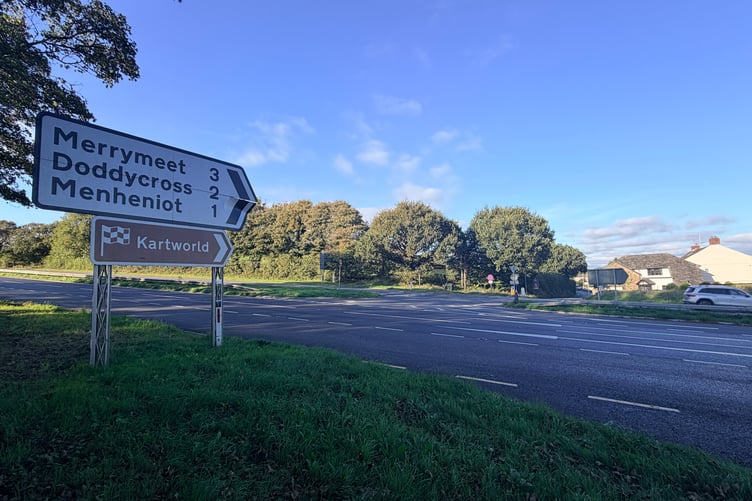
A £6 MILLION plan to improve safety on the A38 between Liskeard and Trerulefoot has come under mounting pressure after local councillors, road safety campaigners and residents raised fears it could transfer danger from the main road onto the rural network.
Cornwall councillors have agreed to write to National Highways outlining their concerns about the proposals, which would remove a number of right-turn movements and close junctions along the busy route.
Safe38 chairman James Millidge welcomed the decision, saying councillors had taken an important step in challenging a scheme he believes fails to provide an adequate long-term solution.
The campaign group wants National Highways to reconsider the proposals in favour of grade-separated junctions and dedicated local access roads, allowing safety improvements to be made without severing connections between communities and businesses.
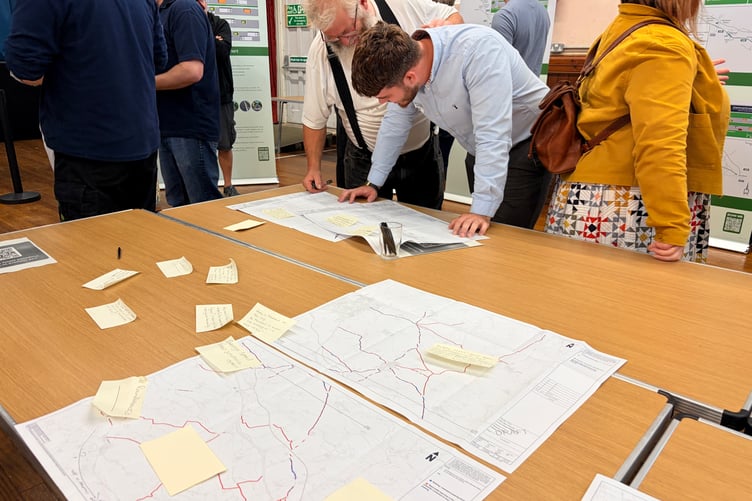
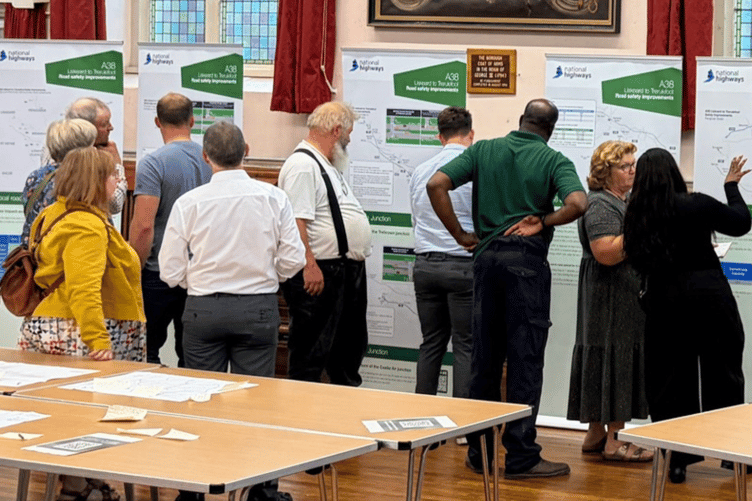
The intervention follows a public consultation event in Liskeard last week, where hundreds of people attended to hear details of the proposed Liskeard to Trerulefoot safety scheme.
The scheme, estimated to cost up to £6million, is expected to enter detailed design in 2027/28, with construction targeted for late 2028/29, subject to funding and no delays. However, the proposals have prompted warnings about longer journeys, increased traffic on minor roads, the impact on farmers and businesses, and whether the changes will deliver the intended safety benefits.
“We’re concerned the scheme does not address what we believe to be one of the fundamental requirements for this section of the A38: the closure of the central reservation gaps,” said Mr Millidge.
“We are particularly concerned about the proposed removal of some of the right-turn movements, especially at Menheniot. There appears to be widespread agreement that, ultimately, what is required is a grade-separated junction together with appropriate provision for local access.”
Safe38 said it was pleased councillors had voted to write to National Highways and thanked them for being proactive on an issue it considers vital to South East Cornwall.




Mr Millidge said he had also written to South East Cornwall MP Anna Gelderd and Cornwall Council’s transport portfolio holder, Dan Rogerson, outlining the group’s concerns, whilst also urging residents to take part in the consultation and make their views known.
One of the biggest concerns is that closing turning movements on the A38 could force drivers onto narrow country roads, increasing traffic through villages and putting vulnerable road users at risk.
“It looks a mess, an absolute mess,” said Mark Gibbons, Cornwall councillor (Looe East & Deviock). “It’s basically building a wall between the two halves of our communities. It’s not improving anything. It’s not improving traffic flow or safety; it’s just moving the risk onto the rural road network.”
He warned drivers would not necessarily follow the diversion routes envisaged by National Highways, particularly when congestion developed.
“They’re going to go whichever way they want, particularly if there’s congestion on the approved routes.”
Mr Gibbons highlighted Hessenford and the B3387, where he said there had been two or three serious accidents over the summer, as an example of the existing pressures on local roads.
He also questioned modelling which he believes underestimates the likely increase in traffic, including the effect of caravans, campervans, larger vehicles and slow-moving agricultural machinery.
“They seem to think it’s fine to double the number of cars and vehicles on the rural road network,” he said.
Mr Gibbons also raised concerns about the projected increase in U-turns at Trerulefoot roundabout, warning some motorists could face journeys up to nine miles longer.
“If this goes ahead, I think we’ll be looking at some serious incidents over the next few years,” he said.
He argued that runners, cyclists, horse riders and walkers must be considered alongside motorists, warning that the affected roads were not designed to accommodate substantial increases in traffic.
Cllr Jane Pascoe (Liskeard South & Dobwalls) shared concerns about the consequences for villages and minor roads, particularly when accidents on the A38 already cause traffic to divert through St Keyne and surrounding communities.
“If we end up with that happening every day, people will find their own routes,” she said. “National Highways is trying to make the A38 safer, but I’m not convinced we won’t see more accidents on the rural roads.”
She stressed improving safety on the A38 was essential, given the fatal collisions on the route, but said any solution had to work for people travelling between Liskeard and Trerulefoot without creating fresh dangers elsewhere.
At the heart of the dispute is whether the current proposals go far enough to address the dangers posed by right turns and gaps in the central reservation.
Safe38 believes the removal of turning movements must be accompanied by suitable alternative access arrangements, including grade-separated junctions and local access roads.
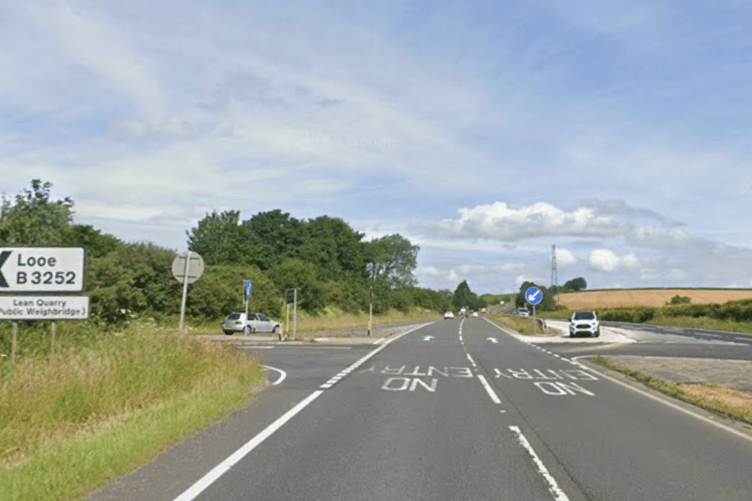
Cllr Pascoe said earlier proposals for integrated junctions at Lean Quarry, alongside a road allowing access to Menheniot, appeared to have been dropped because of the additional expense.
“That seemed like a good plan, but it appears to have been dropped because it costs more money,” she added. “We cannot keep cutting the scheme back until it no longer provides the right solution. We need to get this right.”
Cllr Sean Smith (St Cleer & Menheniot) also questioned whether the scheme was a sticking-plaster solution rather than a direct answer to the safety problems.
He acknowledged that funding for flyovers at Lean Quarry and Menheniot was not currently available but called on National Highways to reconsider how those locations could be made safer.
“Local people are making their views very clear,” he said. “Like other councillors, I don’t think this is the sort of scheme they want to see in its current form because it is going to cause significant disruption.”
The proposed changes have also prompted concerns about the consequences for agricultural businesses and employers whose access could be affected.
Adding to the debate, Cllr Kevin Grey (Liskeard Central) warned increased traffic on minor roads would place additional pressure on infrastructure maintained by Cornwall Council.
He said many of the roads had changed little in decades and were never designed for the volumes of traffic potentially being diverted onto them.
“If the general consensus is that closing these junctions will cause chaos on the minor roads, why not trial it first?” he said. “Don’t spend £6 million implementing the scheme and only then discover the consequences. Put the bollards down and see what happens.”
He also backed consideration of an enforced 50mph speed limit on the dual carriageway, arguing that average-speed cameras could help reduce the risk of collisions involving drivers misjudging the speed of approaching traffic.
Mr Grey identified Menheniot and the Lean Quarry junctions as particular areas of concern. He said near misses were also an important consideration, arguing the absence of recorded collisions did not necessarily mean a junction was safe.
Like the councillors and the safety group, Ms Gelderd acknowledged local views must be central to decisions about the A38, adding residents had made their concerns clear during discussions with her, councillors and National Highways.
“Many of us use this vital road daily to get to school, work and attend essential appointments,” she said. “Residents have been speaking with me about the need for the right resources to be put in place so that they can use the road safely, because the accident rate is far too high, and sadly people have lost their lives on this stretch of road.
“However, changes mustn't cause journey times to skyrocket and force drivers to spend more money on fuel. What we really need is to look at the long-term future of the A38, ensuring connectivity and demanding significant investment.”
Speaking after the consultation, National Highways head of safety for the South West, Jack Mason, said: “We’re still in the early stages at the moment. We’ll take all that feedback away, analyse it and look at where we need to work on the scheme to get the right outcome.”
Comments
We've recently changed our login process. If you have an account for commenting, you will need to re-register on the login window.
This article has no comments yet. Be the first to leave a comment.