
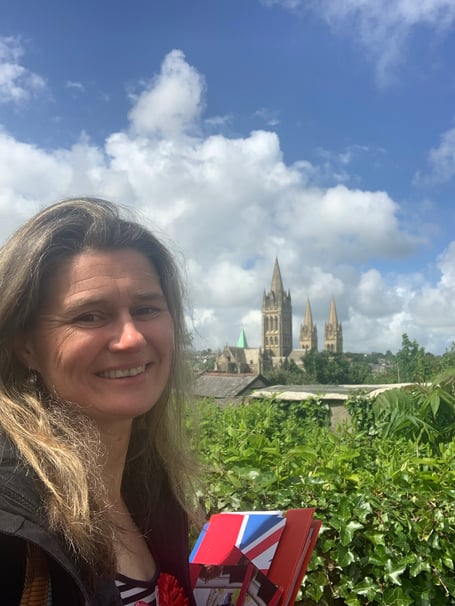
LAST week I joined Ed Vaizey on Times Radio's A Constituency Knockout, where I was challenged to come up with three of the best facts about the constituency. With so many to choose from, it wasn't easy. From shipbuilding to mining and the arts, our constituency has a rich history (including a little piracy). It reminded me of making my maiden speech in Parliament, where I spoke about what makes this part of Cornwall unique.
We are enveloped by sea, making it an integral part of the constituency. As I mentioned on the programme, Falmouth has the third deepest natural harbour in the world after Sydney and the Port of Mahon. Its position at the western end of the English Channel has given it commercial and military significance for centuries. Packet ships took messages and goods across the world. Darwin came ashore here, news of the Battle of Trafalgar came via Falmouth port and many of the D-day operations set off from here.
Pendennis Castle has stood guarding the mouth of the Carrick Roads with its sister castle St Mawes since the time of Henry VIII.
Fishing remains an important part of Cornwall's identity. The Native Fal Oyster, which grows naturally on our seabed, is emblematic. Oysters have been farmed here for half a millennium using traditional methods still in use today. Every October, the Falmouth Oyster Festival celebrates the start of the season.
On the beautiful Roseland Peninsula, the famous Cornish Pilot Gig came into being. Originally built to guide ships into harbour, trade with offshore vessels and rescue sailors in danger, as well as ferrying smuggled contraband, these sleek boats needed speed. The Peters family began building the six-oared gigs in Polvarth in 1790 and many of Cornwall's finest gigs came from Peters Yard, crafted from Cornish Elm seasoned in the creek. Five gig clubs are based in our constituency, and crews from across Cornwall compete each year in the World Championships on the Isles of Scilly.
Academia and the arts have deep roots here too. Penryn's Glasney College was founded in 1265, making this part of Cornwall a centre of learning far earlier than many people might realise. That tradition continues through Falmouth University. Falmouth School of Art opened in 1902, building on the legacy of The Poly, founded by Anna Maria Fox and her sister Caroline in 1833. Painter Henry Tuke settled in Falmouth and, alongside William Ingram, helped establish Falmouth Art Gallery.
The Gwennap mining district used to be the richest place in the world. And I found out that the first use of the tobacco pipe was at the Killigrews’ house with Sir Walter Raleigh in 1598!
The 9 Lessons and Carols Service originated in Truro. I have read in one of the more recent services.
I could have spoken about much more on the show.


I’m intensely lucky to live in and represent this amazing place and it’s great to have the summer recess to spend more time here.
Comments
We've recently changed our login process. If you have an account for commenting, you will need to re-register on the login window.
This article has no comments yet. Be the first to leave a comment.