
I AM pleased to have been reappointed as a Parliamentary Private Secretary in the Department for Environment, Food and Rural Affairs (Defra). This is a department that matters enormously to Cornwall.
When I posted about my reappointment, I got the normal predictable Facebook comment: ‘What do you know about farming?’ I’m not a farmer. But, my dad came from a farming family, and I grew up spending time on my grandparents' farm in Silverstone - feeding lambs, following the baler round the fields, ‘helping’ milk the cows. My grandad did his own milk round with his own milk, and some of the bottles with his name on still exist.
Having a farming family does give me some appreciation of the industry and the people within it. As a representative of a rural constituency, I make sure that my time out of Parliament is spent across the whole of Truro & Falmouth. This means meeting many constituents and businesses - including farms and fishing. I’ve been to visit as many different farms as I can, as well as a local abattoir. And being on the Environment Food and Rural Affairs Select Committee meant I was in the privileged position of being able to interview and visit experts in the sector. As well as being one of the Labour Rural Research Group of MPs.
Doing all of this means I am able to learn more and to hear directly about the issues affecting local farmers. Issues like slurry storage, the Food Standards Agency, and water availability came up. In recent weeks, bluetongue is a spreading and worrying issue in Cornwall and Devon and I have made the Farming Minister aware of the situation down here.
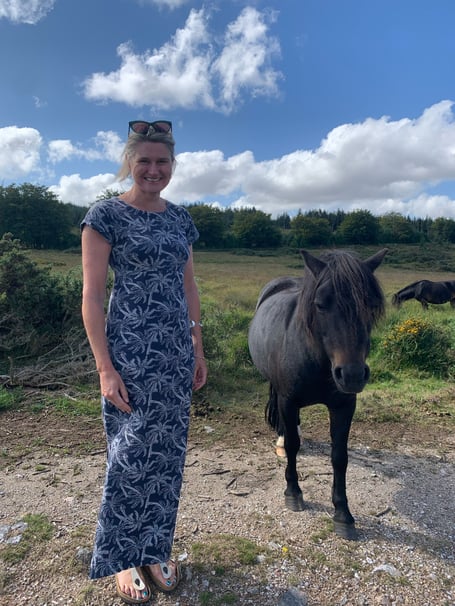
Alongside learning from farmers locally, I have also been pleased to see progress on a South West issue that many people care deeply about: the future of Dartmoor's hill ponies. Many people have been working hard to ensure these iconic animals can continue to roam the moor. There were concerns that ponies could be caught up in efforts to reduce grazing numbers because they were counted alongside sheep and cattle in stocking calculations. The DEFRA ministers listened and that policy issue has now been addressed. The Minister recently confirmed that Dartmoor ponies will no longer be included in stocking density calculations. A new payment scheme, the 'pony premium', has also been put in place to encourage farmers to keep ponies on the moor.
I visited the Dartmoor Hill ponies this time last year, so it is brilliant to see this issue resolved. These semi-wild ponies are part of Dartmoor's identity and play an important role in maintaining the moor's biodiversity. With Natural England confirming there will be no cull, the new arrangements should secure their future and support wider nature recovery.

I know there is a great deal about fishing, farming and everything else Defra covers that I won’t know. But I learn fast and am not embarrassed to ask the people who do.
Comments
This article has no comments yet. Be the first to leave a comment.