
READING opens so many doors. It develops imagination, empathy, language and confidence, and children who read regularly tend do better in school and it enriches their lives. Before this job, I used to read a lot. In fact, I’d often be told to ‘get your nose out of that book and go outside and play’. Attitudes change, don’t they?!
We live in an age full of distractions, and as our screen time increases, our attention spans decrease. It is true that children are also reading online. However, the number of children reading for pleasure has fallen, with only 1 in 3 saying they genuinely enjoy reading. There is a need to encourage a love of reading and help children build strong literacy skills for the future.
That’s why 2026 being the National Year of Reading is so important. This nationwide campaign aims to make reading part of everyday life, not just in classrooms and libraries. It’s a chance for all of us to (re)discover reading.
Habits are contagious. When children see adults absorbed in a book, they’re far more likely to want to read themselves. Learning starts long before school, and parents and carers are our role models. Chatting, playing and reading together in those early years strengthens so much from language to cognition and creativity.




But not everyone finds reading easy, and not every home can be filled with books. Time and money are tight, and reading aloud can feel daunting for many. Adults with low literacy face barriers to employment and may also struggle to support their children’s learning. But there is help, and groups like ‘Read Easy Cornwall’ offer free, friendly, confidential coaching, and the National Literacy Trust also provides excellent resources. Audiobooks also offer a brilliant, accessible way to read.
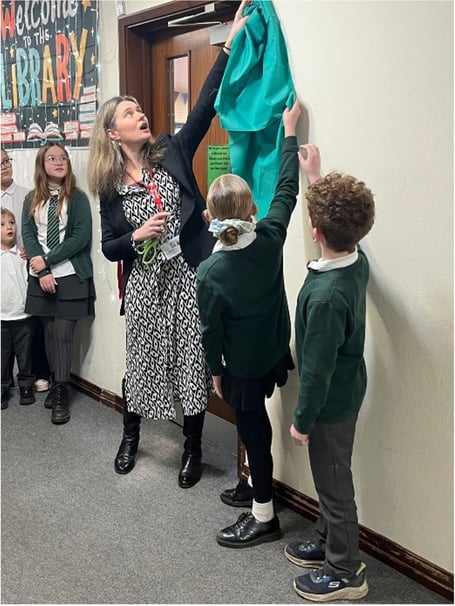
It’s great to see reading being championed across the constituency. Richard Lander School recently took part in the regional heats of the National Reading Champions Quiz, an initiative celebrating and encouraging reading in students. And in December, I got to open the new library at St Francis School where my son went. The wonderful Emma Seager turned a forgotten space into an enticing one. With one in 10 children aged five to 18 not owning a single book, providing welcoming, well-stocked school libraries gives young people a safe, quiet place to read. We’re also investing £27.5-million into non-school libraries to ensure everyone can access a wide range of books.
Work to improve education is also happening through the Regional Improvement for Standards and Excellence (RISE) teams, supported by £20-million to help schools facing long term challenges. In Truro & Falmouth, The Roseland Academy, Penryn Primary Academy and Goonhavern Primary School all saw strong achievements last year following this engagement, showing how this government can directly improve the outcomes for disadvantaged students.
We all still love stories; we just need to make space for reading them. National Year of Reading is about creating opportunities and building confidence, and we're working with the National Literacy Trust to make reading visible across our communities.
Comments
We've recently changed our login process. If you have an account for commenting, you will need to re-register on the login window.
This article has no comments yet. Be the first to leave a comment.