
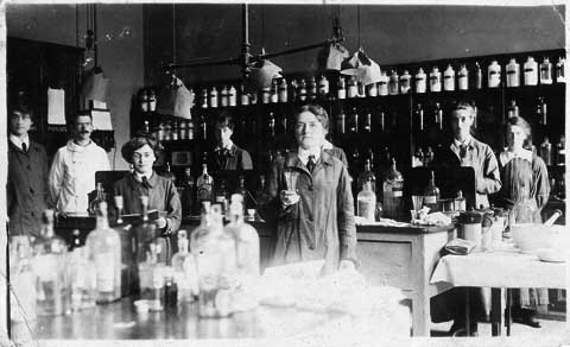
IT HAS been over 100 years since Launceston welcomed home a female prisoner of war, who has been remembered by a local man.
The Post reported on Saturday, February 19, 1916, that a Miss Marion Nicholls had returned home to Launceston after being a prisoner of war in Austria for two months with her nursing expedition team.
The reporter of the story had spoken to Marion directly about her experience on her return home.
This comes about after a local history researcher Jim Edwards has provided the Post with stories on local people during the war years.
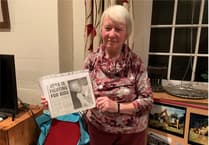
This follows on from a previous report on the history of women farmers during the First World War at Scarne Farm, Hurdon, which Mr Edwards provided the information for.
The Post also featured an article on Marion in 2016, 100 years after her return to Launceston, where the original interview with Marion was featured in full.
Marion Nicholls was born to Edward and Ellen Nicholls in 1876 in Middlesex. Her father, a furniture and blind maker, was from Launceston and eventually settled his family in his hometown in 1888 at Broad Street.
After leaving school, Marion trained as a chemist and in 1911 began working as a doctors’ dispenser in Burton-on-Trent.
She then moved on to become secretary and pharmaceutical dispenser at the Scottish Women’s Hospital Serbian unit.
Over 30 members of the Scottish Hospital Expedition — all of whom were women, including the doctors — would become prisoners under Austrian rule at Kecskemet, Hungary.
Led by Dr Eleanor Soltau, the Scottish Women’s Hospital was dispatched to Serbia on April 20 1915. With other units following their lead, Serbia soon had four hospitals working throughout each day and night, dealing with both casualties from the front and a fatal typhus epidemic, which four of the staff from the Scottish Women’s Hospital died from.
After a hold up in Malta, the unit finally reached Serbia through Salonica and opened a hospital with 200 beds in June at Valjevo.
From there, the unit was approximately 70 miles away from the fighting. The majority of cases were to treat patients with fever, but this soon changed when many wounded were sent to some of their wards.
As winter came around in 1915, the Austrians overwhelmed the Serbian army after being joined by German and Bulgarian forces and, as they invaded, the Serbian forces had to retreat to Albania.
The women from the Scottish Women’s Hospital were forced to make a decision on whether to stay and be taken prisoner, or to travel with the retreating army to Albania. Some decided to stay, whilst others decided to retreat.
At this point, Marion described the war as being extremely close to them, having gradually moved closer, so much so that they could hear the sound of guns.
However, upon the Austrians’ arrival, Marion described their treatment as ‘not unkind’, and went into detail about ‘a man with a fixed bayonet’ being placed in front of the hospital on sentry duty.
The staff were forbidden to leave the site, but she reminisced on how well the Austrian commandant, Prince Lobkovita, had treated them, describing him as ‘courteous and even jovial’.
In her interview with the Post, Marion also recalled a quiet and kind German soldier, who guarded the prisoners. He shared his loaf with some of the ladies who had not eaten for over 24 hours.
She also recounted the difficulty in which their military escorts had with keeping up with them, describing them to ‘fly through the mud like geese’.
Marion had sent her parents a telegram towards the end of her captivity, which was put in German, reading: “Interned, well, love.” It was around this time that Marion had an inkling of when she and her friends would be released, after one of the doctors had asked how she would go about sending her own telegram without any money. The telegram clerk had told her: “You will need no money, for you will be leaving tomorrow for your own country.”
Upon her return on February 14 1916, Marion was met by friends and family, including her father, sister and little dog, ‘Chum’.
The Post finished the article, saying: “At the conclusion of this interesting interview the hope was expressed that the period of rest, which Miss Nicholls so fully deserves, would be pleasant and beneficial. Miss Nicholls said she quite appreciated it and it would doubtless do her much good, but she was ready to go forth again if she could be of any service.”
After some time spent at home in Launceston, Marion served with the French Red Cross and spent a period of time in France during the war up until 1917. She then went to the Royal Victoria Auxiliary Hospital, and would go on to receive accolades for her service.
With the conclusion of the First World War in 1918, Marion worked as a dispenser and, in 1920, returned to Launceston where she lived at Cyprus Well, which would go on to be the home of late poet Charles Causley. Marion also worked as a chemist in the lab at Ambrosia, Lifton, finally retiring in 1940.
Marion was also well known for being a founding member of Launceston WI, a member of the women’s section of the Royal British Legion, a deacon of the Congregational Church and also being heavily involved with the Red Cross.
Comments
This article has no comments yet. Be the first to leave a comment.