
On January 9, the Bude Community Network Panel met to discuss matters concerning Bude and the surrounding network of parishes.
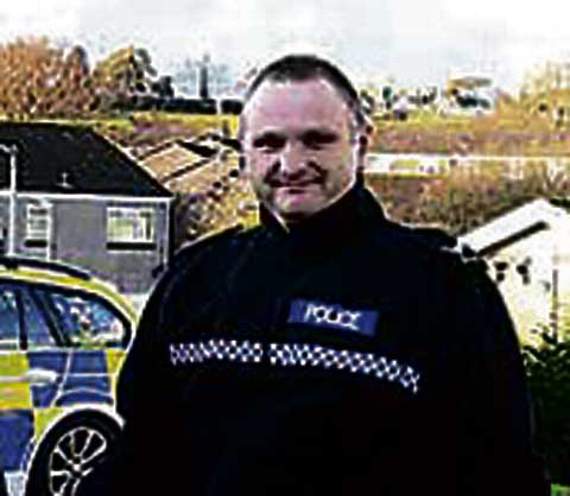
To open the meeting, Sgt Ward spoke of his time with the Devon and Cornwall Police force, and how policing has changed.
Having been with Devon and Cornwall Police for 28 years, Sgt Ward has covered Bude for 15 years, Camelford and Launceston — where he is currently based — and explained to the panel and members of the public that ‘perceptions of what we do may be very different to what we actually do’, adding jokingly that police do not sit and watch the TV all day.



He said: “In the current climate, we have had our resources reduced, including computers, equipment and people — which make up 80% of the policing budget. We have lost a number of good people, due to wastage, who have not been replaced. Therefore, we’ve had to change the way we deal with things.
“I live in the area, so it affects me as well as your good selves.”
The meeting heard that police still respond to emergency 999 calls, which are controlled by bases in Exeter and Plymouth, but have had to reduce the time spent on considerably smaller neighbourhood issues to focus on their main mission at present — safeguarding vulnerable people.
The three main factors for officers to consider is: risk, harm and threat, which are processed through a risk matrix, and a decision is then made for whether an officer will attend an incident or not.
Sgt Ward said: “For example, we may say, ‘sorry, we will not be able to come and look at your damaged shed, but the incident will be looked into’. This can upset people, understandably, because people like to know that the police are there for everyone, which they are. However, as lovely as it might be to see us walking up and down the road, like ‘the good old days’, that’s not necessary anymore.”
He added that neighbourhood teams are vital to the protection of the community, as they directly come into contact with the public and community organisations. The main vulnerabilities that are considered are young people, schools, those who come into contact with drink and drugs, Facebook and social media, and runaways.
As demonstrated, it is clear that one of the police’s main priorities is young people, particularly those who are easily exploited through grooming.
Sgt Ward said: “This is not just in Bude, there is a huge mine for children with drink and drugs, meaning they are being exploited. A huge amount of our time goes into these young people, who are often attracted to different things — clothing, drugs, drink — and this happens everywhere, even in Launceston, Bude and Camelford.
“It is really hard to get these young people to speak out, because if you’re getting all this good stuff, why would you tell the police? But these young people are being exploited. When you don’t see officers walking around like the old days, it is because we have taken some huge steps forward in keeping the community safe.”
Sgt Ward wanted to make it clear that it is important to contact the police if there is anything suspicious occurring locally, even if there is no hard evidence.
He added: “There is a real sense of community in Bude, far more than other places. There’s a real sense of wanting to look out for each other, and we want to get people to come to the police.
“If you notice anything unusual, like 13 or 14-year-old children entering the home across the road, who maybe have no real reason to enter, or if old Bill in the house next door is looking a bit shabby — perhaps his mental health is declining, maybe you should call the police — then please do. These are two completely different ends of the spectrum, but we will be there for both of them.
“It will have a massive impact on you and your life, but if you go back over the steps — could you have prevented that?
“You can help prevent crime by not giving an individual the opportunity. We are in the safest part of the country, but it will happen; we need to be realistic.”
Sgt Ward gave the public present the opportunity to ask questions. Lucille Opie questioned Sgt Ward on the local police station, noting that the front office in Bude should be open at least a couple of hours a day, to allow people to speak to someone directly when reporting something.
In response, Sgt Ward said: “I would love the front office to be open, but it’s just not going to happen, unfortunately. We have half a dozen offices open now, out of the entire force.”
Town councillor, Bob Willingham, asked about the possibility of an online neighbourhood watch system. Sgt Ward explained that a new neighbourhood alert system would soon be going live, allowing people to contact the police directly through an app, and learn more about crimes in the area.
Some were concerned that this would be difficult for some older people, who are unfamiliar with new technologies, but Sgt Ward added: “This is for completely different generations, and we are moving in a very digital world, I’m afraid.”
A key factor to the talk was the importance of internet safety with young people. This could include grooming, online bullying and ‘sexting’ as some of the main threats.
Sgt Ward added: “We do a lot of work with young people around that; it’s just a case of whether they will follow our advice or not.”
However, social media and the internet can be positive when it comes to the police getting messages across to the public, although the meeting heard that the police are currently looking at ways to help people who do not use online resources — particularly in rural areas.
A fine example of involving the public in protecting the community was the mention of the community CCTV project that was introduced to Bude. Although the system is housed in the police station, it is run by the community, with volunteers who give up their time to come in and cover the service all year without fail. This has also seen commitment from local businesses, who have had cameras put up on their premises.
Sgt Ward said: “It works because it is local. The people who run it are local, so there’s a local interest. There’s nothing else to say on this, except local is best!”
One member of the public brought up a subject that was most agreeable amongst the panel and other members of the public. He said: “Why should the police be responsible for what the parents should be responsible for?
“I’m a child of ten, and my parents brought me up right. Why should the police monitor this and that, and this and that, when it should be the parents who look out for their children?”
Sgt Ward responded, agreeing to an extent. He said: “In an ideal world, why shouldn’t it be down to the parents? Unfortunately, some people don’t deliver.”
Comments
This article has no comments yet. Be the first to leave a comment.