
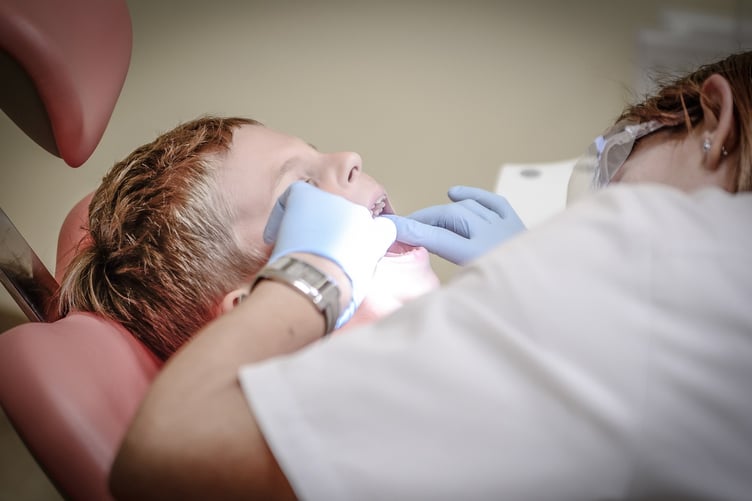
CORNWALL has been highlighted as an area of concern over children’s dental health, with tooth decay significantly above the national average and NHS dentist visits lagging behind.
Almost three in ten five-year-olds in Cornwall have experienced tooth decay, according to analysis from Practice Radar.
The findings show 29.8 per cent of five-year-olds in Cornwall had decay experience in 2023/24, compared with 22.4 per cent across England.
And while the national picture has improved, access to NHS dentistry remains a concern.
Just 46.4 per cent of children in Cornwall saw an NHS dentist in the year to March 2024, against 55.1 per cent nationally.
By March 2026, the figure had risen to 51.8 per cent, but remained below England’s rate of 58.9 per cent.
The findings put Cornwall among 23 councils where children’s tooth decay is significantly worse than the national average and NHS dental attendance remains below the England figure.
Practice Radar compiled the analysis using NHS dental statistics and public health data, comparing rates of decay among five-year-olds with the proportion of children receiving NHS dental care in each council.
It highlights a troubling mismatch between where dental problems are most common and where children are accessing NHS care.
Nationally, 35.1 per cent of five-year-olds in the most deprived neighbourhoods had experienced tooth decay, compared with 12.8 per cent in the least deprived areas.




That means decay was almost three times as common among children living in the most deprived communities.
Yet children in the poorest areas were less likely to have seen an NHS dentist. In the year to March 2024, 49.4 per cent of children in the most deprived tenth of neighbourhoods had been seen, compared with 60.4 per cent in the least deprived.
The gap narrowed by March 2026, but remained: 54.6 per cent of children in the most deprived areas had seen an NHS dentist, against 62 per cent in the least deprived.
Jack Henty, co-owner of Bollington Dental Practice and founder of Practice Radar, said: “Children in the poorest areas have the most decay and are the least likely to see a dentist. That's the wrong way round.”
The figures come as NHS dental attendance continues to recover from the pandemic. Some 7.17 million children were seen by an NHS dentist in England in the year to March 2026, the highest number in the seven-year series.
However, the analysis suggests that recovery is not enough to close the gaps in access. Across England, just 47.5 per cent of children aged one to five saw an NHS dentist in the year to March 2026.
Practice Radar cautions that the figures cover NHS treatment only, so they do not capture children treated privately. Local NHS commissioning decisions affect access, meaning the data cannot explain every difference between councils.
The decay figures measure whether a child has experienced decay, including teeth that have been filled or removed, rather than only untreated problems.
For Cornwall, the figures underline the scale of the challenge: tooth decay remains above the national average, while NHS dental attendance continues to fall short.
Comments
We've recently changed our login process. If you have an account for commenting, you will need to re-register on the login window.
This article has no comments yet. Be the first to leave a comment.