
By Colin Brent
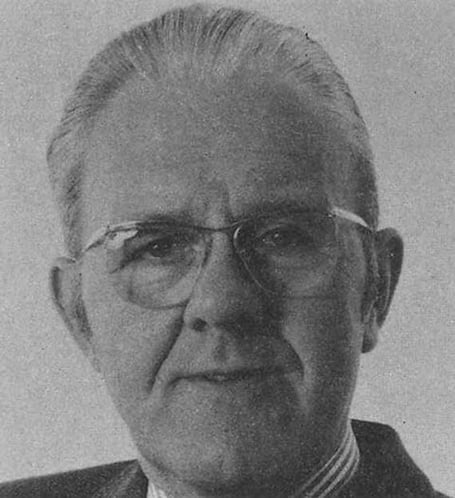
FOR North Cornwall and West Devon, but most of all Launceston, the loss of Arthur Venning means the loss of a loyal link with the past.
His was a long life and while physical frailty inevitably caused him some problems, thankfully his mind remained incisive and perceptive.
In the days when social media was undreamed of the Cornish and Devon Post was in effect the sole local recorder of celebration and change, of life and of death.

But it is more appropriate to call it Arthur’s Cornish and Devon Post — for so many of us the paper and the person were and always will be inseparable. For his staff, the Post felt like a family.
The Post editorial department was once a room streaked with clouds of smoke, the clatter of typewriters broken only by Arthur occasionally singing a favourite of his, one of Groucho Marx’s signature songs: ‘Oh, Lydia, Oh, Lydia, say have you met Lydia? Lydia the tattooed lady.’
He loved songs and snatches of dialogue from the films of his youth — the potted biography in his literary labour of love, ‘The Book of Launceston’, includes among his centres of education the town’s old cinema, the Picture Palace.
Most mornings Arthur would go for coffee in the White Hart, often with his wife, Vera, but it was not just a social break.
In what would now be called networking, he would also chat with townsfolk and invariably would return to the office and tell a reporter to write some copy on the scholarly achievement of someone’s daughter or son, a road closure or business development; always alert, always conscious that the Post was a matter of record.
In those days, the paper was printed on the premises in Launceston and is it a fanciful memory to think that the building almost shook when the flatbed printing press rolled every Thursday? Shortly after the print run started, Arthur would come into editorial from the case room, swinging an extendable metal ruler as if it were a golf club, and declare: ‘That’s another weekly miracle.’ So described he said, ‘because it’s a miracle we get it out each week.’
Flatbed press, case room, those are terms from the long gone glory days of newspapers — before Facebook, before Twitter — when in Launceston, Bude, Holsworthy and Camelford, and the many villages between, the only way residents could discover what was happening in their area was when the weekly paper arrived.
Arthur cherished ‘ Post country’ — be it town, village or hamlet, no community felt ignored.
Agricultural shows were when his newspaper came into its own. With most taking place on a Thursday, reporters would interview prizewinners and the show officials and write their copy immediately.
Show results would be telephoned to the office by Bill Roberts from a nearby phone box, typed out in editorial, passed to the typesetters and swiftly laid into columns of type. These, ready for the press, were a mirror image of what would appear in print — despite that, Arthur had a fascinating ability to read them as if they were in a normal format.
His instruction was always to close off show coverage as soon as the results were in from the WI tent — the papers, full of reports and results, would be in the shops before the show was over.
He was always aware that the people the paper wrote about were its readers and that sensitivity had to be an editorial priority. If more editors had shown such understanding then Lord Justice Leveson could have spent 2012 relaxing with some good books instead of heading a public inquiry into the practices and ethics of the British press.
Arthur loved newspapers. Each day he would read the Western Morning News and the Telegraph and would often ask to look at my copy of the Guardian, saying, ‘Pass me that pinko, communist, anarchist rag of yours.’
I once handed it to him and said, ‘Arthur, it’s still the finest English language newspaper there is.’ He peered at me over the top of his spectacles and in mock pomposity said: ‘My boy, you’re forgetting the Cornish and Devon Post .’
He retired in 1984. Since then the Post has not had a finer editor. It never will have.
Comments
This article has no comments yet. Be the first to leave a comment.