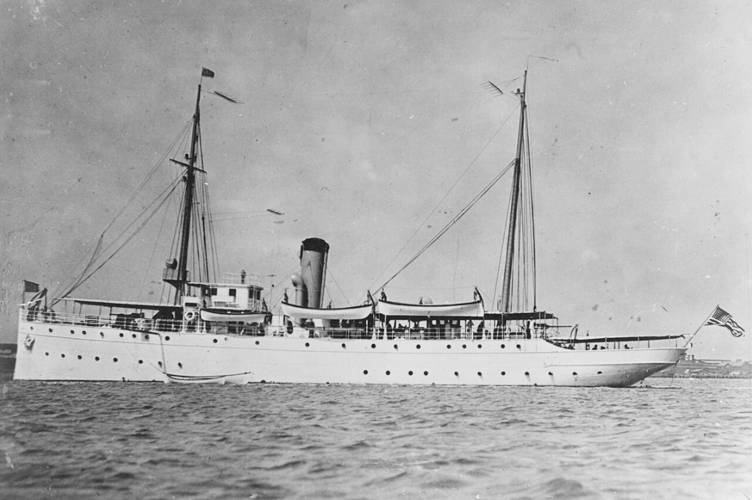
A SHIPWRECK that resulted in the largest loss of life on any US combat vessel during the First World War was discovered off the Cornish coastline on Sunday following a three year search.
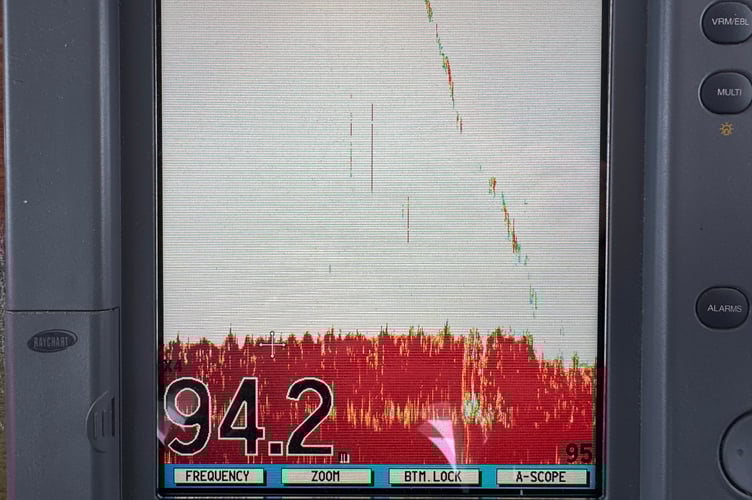
The US Coastguard Cutter TAMPA, missing since being torpedoed by German U-boat UB 91 on September 26, 1918, has been found in 320 foot of water some 50 miles off Newquay by the Gasperados Dive Team.
She sank with all hands including 111 United States Coast Guardsmen and a further 19 Royal Navy sailors, British civilians and US Navy personnel.
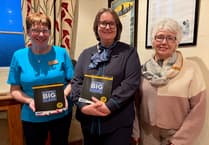

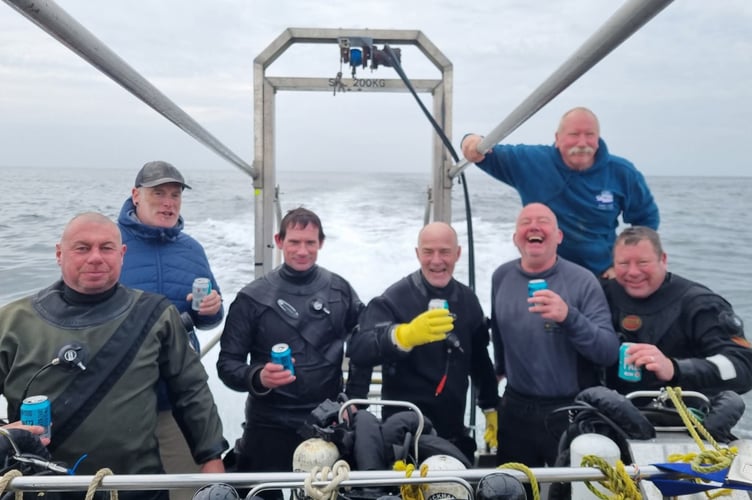
The Gasperados Dive Team, which has included Chris Lowe from Newquay based Atlantic Diver, is liaising with the US Coast Guard about the next steps. Mr Lowe has been credited as being “fundamental” in helping find the shipwreck.
Team leader Steve Mortimer said: “This discovery is the result of three years of research and exploration. TAMPA is of huge importance to the United States and the relatives of everyone who died that day. Their final resting place is known at last.
“This was a real team effort. Our grateful thanks to skipper Chris Lowe from Atlantic Diving, who was fundamental to finding the wreck.
“We also had wonderful support from U-boat historian Michael Lowrey, Coastie veteran Charles Meyer and the US Coast Guard itself, particularly Atlantic Historian Dr William Thiesen.”
Mr Lowe said: “It’s a very significant shipwreck for the Americans.
“Basically we started with the position that the German U-boat gave for the sinking. Generally the Germans were very good at accuracy but what we found was a fishing vessel. There were various wrecks in that area.
“There was also a position where debris was found so we had a rough area to start looking.The Americans themselves had a position for the wreck site, but when we dived that it was not the TAMPA it was a fairly modern fishing vessel.
“The dive researcher Barbara Mortimer, the wife of the team leader, went back through the archives and found out as much information as possible about the sinking and the debris found at the time.
“The TAMPA had been in a convoy off the North Cornwall coast had had left to get some more coal from Milford Haven in Wales when she was struck by a torpedo but no one knew where it was.
“Mrs Mortimer provided 10 targets we needed to dive. We found a fishing vessel that had been rammed and cut in two, a tank landing craft, which was extremely interesting. We also found a freighter called The Ingrid Frem, which was carrying a cargo of salted herring, a steel sailing ship, two more fishing vessels and a very large unknown steamship.
“We had basically given up and Sunday was the final push.
“It was an extremely long way offshore and conditions need to be perfect to be able to find it. The realisation the TAMPA wreck had been discovered was staggered because divers were surfacing at different times.
“One diver said they recognised something from the wreck that they had seen on photos of the vessel and then excitement started to build when another diver returned saying something similar.
“It is sensitive site and we have just checked the video footage for the identification purposes. Nothing has been removed from the wreck.
“The discovery is an extremely high achievement for us here in Cornwall. It is one of the most important wrecks we have off Cornwall and for the Americans it is extremely important we have found it. No doubt it will be broadcast all over the USA. They are going to be really chuffed about it.
“During the last three years we have been working closely with the American government. The US Coastguard will lay a wreath at the site.
“The search for TAMPA is something I have been working on for three years so I’m very pleased. One hundred and 30 people died on the vessel so its discovery will be closure for many families.”
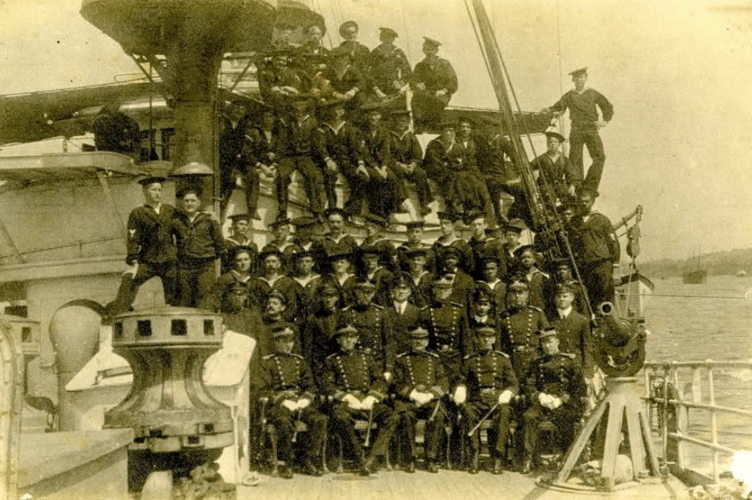
Tampa was transferred from Coast Guard control to Navy control on April 6, 1917, when the United States entered World War I, for the duration of hostilities, but remained crewed by Coast Guardsmen.
Her war service lasted just eleven months. During that time, she was assigned ocean escort duty protecting convoys from German submarines on the route between Gibraltar and the southern coast of England.
Tampa spent more than half of her time at sea and on average steamed over 3,500 nautical miles per month.
She escorted 18 convoys between Gibraltar and Great Britain between October 27, 1917 and July 31, 1918, losing only two ships out of all those escorted.
During the late afternoon of September 26, 1918, Tampa parted company with convoy HG 107, which she had just escorted into the Irish Sea from Gibraltar. Ordered to put into Milford Haven, Wales, she proceeded independently toward her destination.
At 1930 that evening, as she transited the British Channel, the warship was spotted by UB-91.
According to the submarine war diary entry, the U-boat dived and maneuverered into an attack position, firing one torpedo out of the stern tube at 2015 from a range of about 550 meters. Minutes later, the torpedo hit Tampa and exploded portside amidships, throwing up a huge, luminous column of water.
The cutter sank with all hands including 111 Coast Guardsmen, four US Navy personnel, and 16 passengers consisting of 11 British Navy personnel and five civilians.
Alerted by the convoy flagship, whose radio operator reported having felt the shock of an underwater explosion at about 20.45, search and rescue efforts over the succeeding three days turned up only some wreckage, clearly identified as coming from Tampa, and a single unidentified body.
Three bodies were later recovered, two from a beach near Lamphrey, Wales, and the other at sea by a British patrol boat. Tampa was struck from the Navy list as of the date of her sinking.
The loss of Tampa is commemorated by the United States Coast Guard Memorial at Arlington National Cemetery and in the chapel at the Brookwood American Cemetery and Memorial in Surrey, England.
Comments
This article has no comments yet. Be the first to leave a comment.