
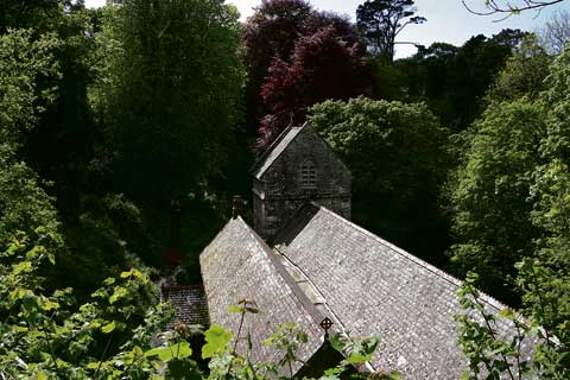
THE future for bats roosting in historic churches in Cornwall is looking brighter thanks to £3.8-million from the National Lottery.
One church in Cornwall that could benefit is Minster Church, Boscastle, that plays host to a maternity roost of horseshoe bats — it is suspected to be the largest roost in Cornwall and among the largest in the UK.
Due to the horseshoe bats’ protected status as a rare species under threat, those in charge of the church cannot disturb the roost.
The Heritage Lottery Fund (HLF) has approved the development stage and initial funding for a five-year ‘Bats in Churches’ partnership project in order to bring together wildlife and heritage conservation and church organisations to save bats and protect churches.
The new groundbreaking project hopes to trial and perfect newly developed techniques to enable bats and church organisations to live together.
It is also looking to build up professional expertise and volunteer skills to share the best solutions with hundreds of churches whilst bringing together communities and bat enthusiasts to create a shared understanding and appreciation of England’s historic places of worship and the rare flying mammals.
Natural England’s chairman Andrew Sells said: “This is a splendid result for both congregations and bats, who have shared churches for centuries but not always happily. We’ve been working very hard for a number of years with our partners to find ways to help bats and people coexist peacefully in these beautiful, historic buildings.
“This funding will allow us to capitalise on that good work and find innovative new ways of resolving the conflict. It will provide a lasting legacy for these wonderful churches and the people and bats that rely on them.”
The project will provide help and support to places of worship across England where large bat populations can sometimes have a negative impact on historic buildings and the communities who use them.
Heritage Lottery Fund’s CEO, Ros Kerslake, has welcomed the ‘unprecedented co-operation’ project between churches and bat conservationists and believes it is a positive move in the right direction to provide practical solutions for what he believes has become a national problem.
Joint chief executive of the Bat Conservation Trust, Julia Hammer, added: “Bats have suffered massive population declines and churches provide important safe spaces for nine species to shelter. We are delighted that with this funding from HLF, church communities and bat workers can together play a significant role in supporting these vulnerable and fascinating species, whilst at the same time protecting historic medieval church buildings and opening church doors to wider communities.”
Whilst small bat populations can occupy parts of a church without disturbance, in other cases bats can pose severe financial and social problems for congregations. At a time when churches are increasingly becoming community hubs with a diversity of events and uses, bat droppings can restrict activities, damage historic aretfacts, cause hygiene issues and put strain on the volunteers who look after these beautiful buildings. In rare cases large bat roosts have even caused churches to close.
Comments
This article has no comments yet. Be the first to leave a comment.