
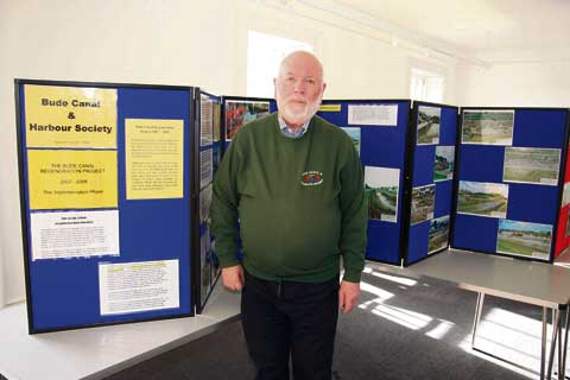
In 1997, the North Cornwall District Council developed a partnership with key community groups — including parish councils, Bude-Stratton Town Council and other organisations — to develop a plan for the restoration of the Bude Canal, as well as improving the access and use of the canal.
This followed on from several years of promoting the regeneration of the canal as a viable project.
A feasibility study (1998) was then carried out, recommending that the canal should be put back into operation for navigable boats. In order to do this, the canal would have to be dredged, and the two inland locks would have to be restored, making the two bridges at Rodds Bridge and Whalesborough navigable.


Consultation of this report showed that there was sufficient evidence to proceed to the next stage of detailed feasibility and identifying costs. Further funding was granted by SWERDA and a study was carried out by Halcrow in 2001.
Finally in March 2005, £271,000 for the development phase was granted by the Heritage Lottery Fund (HLF), which was followed by 18 months of detailed, extensive reports and plans that were prepared for engineering, conservation, business, interpretation, audience development and education, access, marketing and training matters. This information was presented to the HLF in a three-volume report.
The two other main funders, SWERDA and ERDF, had agreed that if HLF were happy to support the implementation phase, they would also commit to funding the project. A total of £3.5-million in funds were secured, and with the support of the North Cornwall District Council and pledges from partners within the partnership, the total stood at over £3.8-million by October 2006.
With the appropriate funding secured, the project was able to get underway, with a deadline of December 31, 2008. Everything was going smoothly until March 10, 2008, when a storm hit, lifting the southern canal gate off its pivot, causing the gate to tilt and break the seal of the two gates, allowing the water to escape, which gradually drained the canal. Following this, a cofferdam was constructed just above Falcon Bridge, and was completed by March 11, 2008.
As well as this, work revealed extensive repairs and maintenance to the banks and walls needed to be carried out, which was authorised by the North Cornwall District Council and completed in time for the June 30 deadline. The cost of the works totalled to just under £500,000, which included remedial works to the sea lock gates to prevent the reoccurrence of the effects of the previous storm.
Additionally, the project was also required to show benefits to the economy, meaning four new canal side workshops on Lower Wharf and four new offices above the new visitor centre were constructed. As well as this, the Tourist Visitor Centre was refitted, including informative displays and featuring all there is to know about the canal and its project.
Comments
This article has no comments yet. Be the first to leave a comment.