
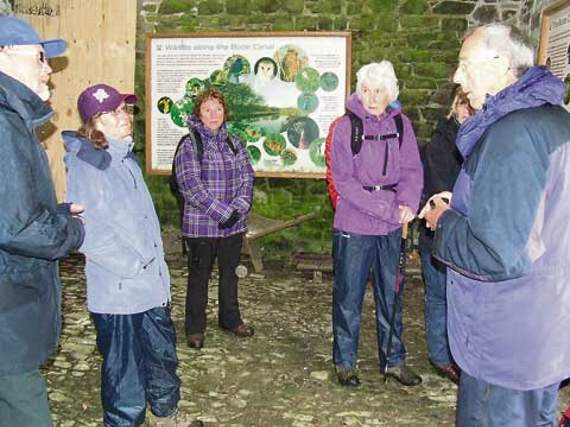
IT has been another full year for a number of volunteers of Bude Canal Trust.
They have been working on the five and a half miles (8km) length of the Aqueduct Trail and canal from the Lower Tamar Lake through Virworthy Wharf, Dexbeer, Moreton Mill Bridge, Puckland, Dunsdon Nature Reserve, Brendon Bridge, Vealand and Burmsdon in the parish of Pancrasweek.
The Virworthy Wharf building, approximately half a mile from the start of the footpath at the Lower Tamar Lake car park, contains several information boards about the canal and this has recently been added to with a new display — built with aid of timber kindly donated by K J Bromell — of artefacts collected from the canal and its original land ownership.
In addition, a new information board has been placed at the junction point of the branch line originally running through to Holsworthy. The neighbouring short section of this branch, through to the Lishaperhill road, is now privately owned, as are many other sections of the original 35 miles constructed almost 200 years ago.


Much of the work carried out has been in maintaining hedges and access along the footpath, which includes an inclined plane just west of Vealand. Clearing of vegetation from the nearby filter beds was also undertaken.
The filter beds were constructed in 1902 after this section of the canal was bought by Bude and Stratton Urban District Council to utilise the water in the canal as a source of the first piped drinking water for Bude and Stratton.
By this time the canal was no longer required for its original purpose as a means of tub boat navigation to transport sand from Summerleaze Beach to the impoverished farmland due to railway links having arrived and the production of artificial fertilisers.
With the more recent construction of larger reservoirs, the supply of water from Tamar Lake was eventually discontinued in the early 1970s, creating the deterioration of any remaining unused sections of the canal which had not been sold off to local land owners.
The section of the canal previously purchased by Bude and Stratton Urban District Council was sold to the Bude Canal Trust with the towpath being adopted by Devon County Council as the longest single continuous footpath in Devon.
The short section beyond the Aqueduct Bridge over the Tamar into Cornwall remains as a permissive path with no points of exit through privately owned farmland. New signs have been put in place to discourage walkers from taking unofficial short cuts through private land.
In 2008 new trustees and committee members took over the management of the trust, with the continued aim to maintain and promote the important aspects of the canal, which contributed to the overall heritage and historical development of Bude, Stratton and many outlying inland villages and hamlets.
An adopted management plan sets out variations in the amount of intrusive vegetation being managed along the canal’s length, creating different habitats for wildlife and flowers.
Much of the organisation of this development has been down to one of the founder members of the new trustees, Tim Dingle.
Previously working for North Cornwall District Council as a coast and footpath officer, the background experience he has provided has been much appreciated by the other trustees, committee members and volunteers.
Tim and his wife, Sandy, have just moved out of the Bude area to be closer to family members and the trust expressed thanks to them both for their contributions to the physical work on the canal, fundraising events organised at their home and general help and support.