
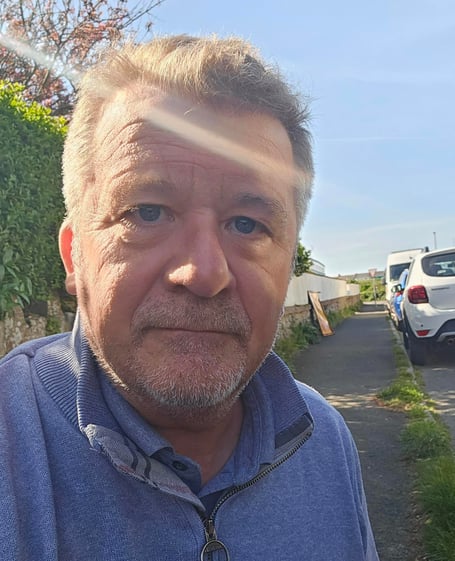
A COUNCILLOR from Bude believes the council got aspects wrong in its handling of the controversial glyphosate weed killer rollouts.
Peter La Broy, Cornwall councillor for Bude, has reflected on what has been a turbulent few weeks for Cornwall Council following its proposed rollout of glyphosate weed killers across the county.
Speaking to the Post, he said: “At the start of this council term, Cornwall Council’s leader, Leigh Frost, made it clear that improving the condition of our public spaces would be a priority.
“To achieve this, officers gathered information and developed a new approach to managing weeds and unwanted vegetation. The aim was not purely cosmetic. Vegetation growth can damage pavements, contribute to road degradation and obstruct footpaths used daily by residents.



“The proposed programme included increased mechanical removal, more frequent sweeping, better use of specialist equipment and additional repeat visits to streets that had been neglected for too long. In limited circumstances, where other methods were not practical, it also allowed for a very carefully controlled droplet application of weedkiller, specifically glyphosate.”
Cllr La Broy has said that issues arose during the council’s process of local devolution regarding the decision to use the substance.
He continued: “A key part of the plan was to give town and parish councils a choice: they could opt into the council’s programme or provide their own weed control service to an agreed standard, supported by equivalent funding. However, the timing of this offer proved problematic. By the time Cornwall Council’s budget was agreed and details passed on, town and parish councils had only a narrow window—just a couple of weeks—to decide, and this was just before the growing season began.
“This was widely acknowledged as unsatisfactory, and both the leader and deputy leader offered an apology at the full council meeting.
“At that meeting, councillors debated a motion calling for the implementation of the programme to be paused. Many councillors, myself included, had been heavily lobbied by residents concerned about the use of weedkillers in public spaces.
“As with many environmental issues, there is research supporting different conclusions on the impacts of glyphosate on human health and the environment. After reviewing this evidence, I concluded that controlled droplet application presents only a negligible risk. However, others took a different view.
Despite this, the council decided to maintain its 13-year-old ban on the chemical weedkiller.
“The council may need to develop alternative approaches,” continued Cllr La Broy. “I would like to see greater involvement from communities themselves, perhaps through “love where you live” groups, alongside Community Payback schemes and opportunities for people seeking to return to work.
“We should also continue to explore other methods, including improved mechanical removal, alternative treatments such as hot foam, and, of course, the reliable stiff broom. Whatever the final mix, the council’s goal remains the same: to care for our public spaces and restore pride in our neighbourhoods, even if we now must achieve that in a different way.”
Comments
This article has no comments yet. Be the first to leave a comment.