
A BOOK, out this month, will detail the life of the first ‘gentlewoman’ to set foot in the colony of New South Wales in Australia — that of Elizabeth Macarthur, hailing from Bridgerule.
Elizabeth was a well-educated woman who lived in Bridgerule in the 18th century, living a life similar to those featured in a Jane Austen novel. Born at Lodgeworthy, Bridgerule, in 1766 to the well-off farmer Richard Veale and his wife Grace, Elizabeth received a good education as a young girl that would allow her to manage her husband’s tricky affairs in later life. She married army officer John Macarthur in 1788, and in 1789 made the six-month journey to New South Wales, Australia, after her husband joined the New South Wales Corps. During the voyage, Elizabeth lost a baby girl.
Elizabeth was the first educated ‘gentlewoman’ to have stepped foot in the colony, and she and John would go on to be renowned for their management of Merino sheep in New South Wales, and for the huge production and exportation of wool.
Now a new book, written by Michelle Scott Tucker from Victoria, Australia, will go into detail about this influential Bridgerule woman’s life, which was certainly a difficult one. This is to the delight of Rose Hitchings from Bridgerule, a self-confessed collector of all things old with a connection to Bridgerule, who is glad to see more information presented about this woman, who was very often hidden in the shadow of her husband.



Elizabeth and John would go on to have seven surviving children — four boys and three girls — all of which grew up at their home on Elizabeth Farm, which John named after his wife. John has very often been given credit for the introduction of the thriving wool industry in Australia, when it is believed to have been Elizabeth who led this success.
With an argumentative nature, John often found himself in trouble with the law, and returned to England for eight years, while Elizabeth was left in Australia to look after the farm and the children. It was Elizabeth’s positive attitude, drive and resilience that drove the success of her farm’s wool business, and now gives Australia a leading name in the wool industry.
The Macarthurs were one of the wealthiest families in the colony, and Elizabeth Farm is now a museum for visitors to imagine the family wandering the land, nipping in and out of the huge rooms and exploring the nearby creek in the late 18th to early 19th century.
Elizabeth has been remembered in Australia in a variety of ways. Her legacies include the Elizabeth Macarthur Agricultural Institute, Elizabeth Macarthur Ave, Elizabeth Macarthur High School and Elizabeth Macarthur Park.
Rose, a proud Bridgerule-r, told the Post: “Bridgerule today has a population of about 1,000, but when Elizabeth Veale was born here in 1766 the village must have been very different and life very much harder.
“Elizabeth Veale, educated here and married at St Bridget’s Church, must have been a very strong character to have endured the many hardships she came across in her life. I try to imagine how she coped with being married to a soldier and having to spend six months of her early married life on board a ship, aged 23, heading in varied weather conditions for Australia, only guessing at what her future life was to be like in a country she knew little about. The couple sailed with convicts living below them in very squalid conditions on a ship where basic living conditions were so bad they chose to change ship during the journey. They already had a baby son to care for on this journey and a daughter was born to Elizabeth on the voyage, which didn’t survive — imagine the grief she had to endure.”
Rose continued: “In Australia, it seems that it was Elizabeth, in her husband’s absence, who was responsible for their large estate and the direction of their convict labourers. She managed their Merino sheep flocks, chose the rams, organised the sale and export of sheep, improved on the quality of fleeces — caring all the time for her seven children and their education — quite a lady and one that Bridgerule today should be very proud of.”
Michelle Scott Tucker, author of ‘Elizabeth Macarthur: A Life at the Edge of the World’, which was due out on April 2, came to England around three years ago and paid a visit to Bridgerule to see Lodgeworthy farm, where Elizabeth was born, and took photographs of the family graves in the village.
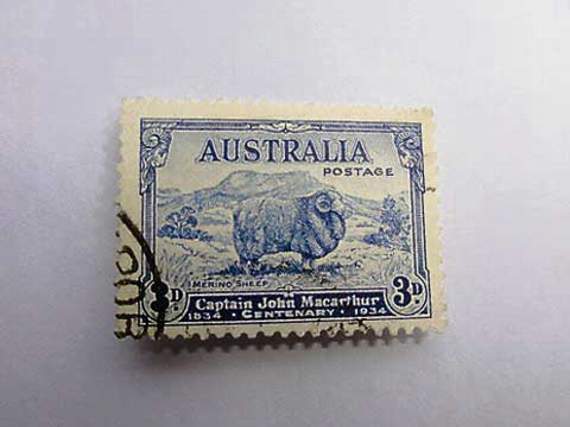
Rose and another local lady, Sheila Cholwill, were promised copies of the book she was writing, documenting the life of Bridgerule’s amazing past resident Elizabeth Macarthur. Rose has been able to purchase some commemorative items through eBay to remember Elizabeth and her family. She added: “Elizabeth was so famous that her likeness was put onto a $5 silver Australian coin in 1995. John Macarthur appears on a 200-year bicentennial medal from 1766 to 1834, a $2 bank note, and a set of stamps issued in 1935 that have his name and Merino sheep on them. These items I have been able to buy through eBay and keep with pride alongside all my other photos and information on Bridgerule’s past.”
‘Elizabeth Macarthur: A Life at the Edge of the World’ is available to buy on ebooks, Amazon and www.bookdepository.com
Comments
This article has no comments yet. Be the first to leave a comment.