
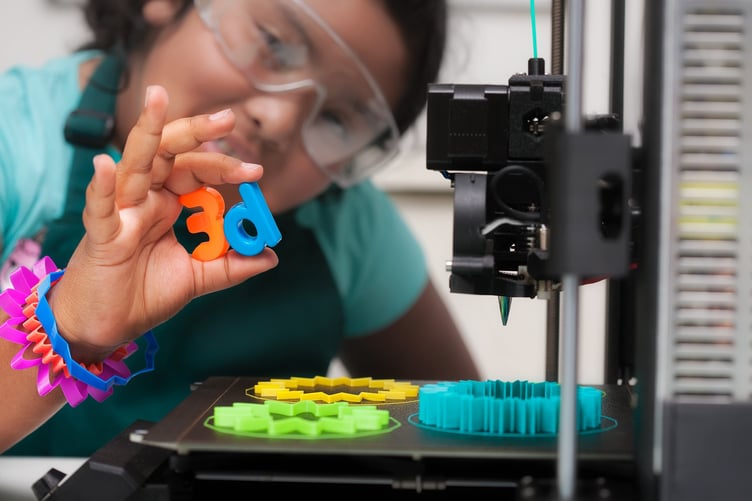
The global 3D printing market is projected to more than double by 2030. As prices drop and quality soars, companies like 3D Experten are bridging the gap between consumer curiosity and professional-grade output.
3D printing has quietly crossed a threshold. What was once a niche hobby for tinkerers and a prototyping shortcut for engineers has become a legitimate manufacturing method adopted by aerospace giants, hospitals and automotive companies worldwide. The global market for 3D printing was valued at over 18 billion pounds in 2025, with annual growth rates projected between 15 and 20 percent through the end of the decade. Desktop printer shipments alone surpassed one million units globally in the first quarter of 2025.
Behind the market data is a practical reality: a fully capable FDM 3D printer now costs less than 400 pounds, materials range from basic PLA to carbon fibre reinforced nylon and flexible TPU, and modern slicer software handles everything from automatic support generation to multi-material prints with minimal user input.
From early adopter to mainstream tool

.jpeg?width=209&height=140&crop=209:145,smart&quality=75)


The shift from prototyping curiosity to everyday tool has been driven by three converging trends. First, hardware has become remarkably reliable. Machines from manufacturers like Bambu Lab, Creality, Prusa and Ultimaker now deliver consistent results out of the box, with automatic bed levelling, enclosed print chambers and high-speed capabilities that were unthinkable at consumer price points just a few years ago.
Second, the material ecosystem has matured. Users are no longer limited to brittle PLA prints. ASA for outdoor applications, PETG for mechanical strength, TPU for flexibility and even metal-infused filaments have opened up use cases from functional automotive parts to medical prototyping.
Third, software has eliminated much of the learning curve. What used to require hours of manual calibration and failed prints now takes minutes of setup, with intelligent slicing algorithms optimising layer height, infill patterns and print speed automatically.
3D Experten - A Nordic approach to a global market
One company that has ridden this wave since its early days is 3D Experten. Founded in 2012, the Nordic retailer has grown to a team of around twenty staff and established itself as one of the leading suppliers of 3D printers, filaments and accessories in Scandinavia. The company serves private consumers, businesses and public institutions including schools, universities and libraries.
The product range spans the full spectrum: entry-level desktop printers for beginners, professional-grade machines for production environments, and an extensive catalogue of materials including the company's own 3DE Premium Filament line, available in speciality variants like 3DE Max, 3DE Silky, PBT+ and KungFuFlex.
What sets 3D Experten apart in a market crowded with cross-border e-commerce sellers is its emphasis on service and support. Every product undergoes multiple levels of testing before it ships – first at the manufacturer, then in-house – with the goal of ensuring the printer works from the very first print. Customers have access to phone, email and remote desktop support, and service agreements provide technical assistance and free shipping to the service centre if hardware issues arise.
That proposition has proven particularly compelling for customers who might otherwise buy directly from overseas platforms at lower prices but face the reality of limited or non-existent aftermarket support.
3D scanning closes the loop
Beyond printers and materials, 3D Experten has expanded into 3D scanning, stocking handheld and desktop scanners from manufacturers like Revopoint, Creality and Shining3D. Consumer-grade scanners now start at around 400 pounds, making it feasible for hobbyists and small businesses to capture physical objects, edit them in CAD software and reproduce or modify them via 3D printing.
The scan-to-print workflow has practical applications that go well beyond novelty. Reverse engineering discontinued spare parts, creating custom-fitted prosthetics and orthotics, digitising art and heritage objects, and quality-checking printed output against original design files are all use cases that are becoming routine rather than exceptional.
What comes next
The fastest growing verticals in 3D printing – healthcare, dental and aerospace – are pushing the technology toward higher precision, new materials and larger build volumes. Metal printing, once the exclusive domain of industrial labs with seven-figure budgets, is beginning to trickle down to smaller operations. And as sustainability pressures mount across industries, additive manufacturing's ability to reduce material waste by up to 95 percent compared to subtractive methods is becoming a powerful argument for adoption.
For the average buyer, whether a hobbyist printing custom parts at home or an engineer prototyping a new product, the equation has never been more favourable. Prices are lower, quality is higher, material options are broader and local support from companies like 3D Experten means the technology is genuinely accessible – not just affordable, but usable from day one.
Comments
We've recently changed our login process. If you have an account for commenting, you will need to re-register on the login window.
This article has no comments yet. Be the first to leave a comment.