
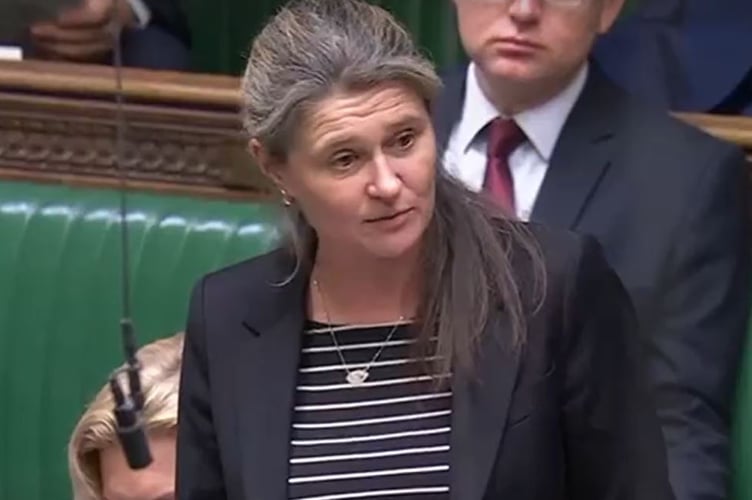
RECENTLY, Dirty Business, a new docudrama examining sewage pollution and the tragic death of Heather Preen, aired. Since then, constituents have contacted me calling for an end to profiting from pollution and for water companies to be structured to serve the public and the environment, not just shareholders. That’s a reason I wanted to be the MP for Truro and Falmouth, and why I sit on the Environment, Food and Rural Affairs Committee.
Here in Cornwall, we’re confronted by sewage pollution. Sewage spills have left residents angry, not only because of rising bills, but because these spills damage our health, economy and environment. Our rivers, lakes and seas have been polluted at record levels, while water pipes have been left to crumble into disrepair.
Investigations by Surfers Against Sewage found that South West Water (SWW) was responsible for the highest number of illegal dry weather discharges, with 46,191 hours of sewage spills recorded in 2025. These figures underline how private water companies have been allowed to profit at the public’s expense, money that should have been invested in maintaining and upgrading infrastructure. This failure reflects a broken regulatory system and a culture within the privatised water sector that lets us down.
When this government came into office, there was a lot to clean up. Putting the public interest back at the heart of our water industry was a priority. The Water (Special Measures) Act was designed to do that. Water company bosses can now have bonuses stopped and face criminal proceedings if need be. Companies are required to publish sewage discharge data within an hour, provide greater compensation when customers are failed, and ringfence money for infrastructure.



Further reform is coming. The government’s White Paper, ‘A New Vision for Water,’ sets out a radical overhaul of how England’s water industry is regulated. It proposes a single, powerful water regulator, a statutory water ombudsman, and compulsory MOT style checks on water company infrastructure to ensure maintenance happens. And regulators would be able to step in earlier when companies fall short, ending slow responses and a lack of accountability.
I recently visited Gyllyngvase Beach to see a new stormwater storage tank built by SWW. Designed to vastly reduce raw sewage discharges, it shows what can be achieved with public pressure and a renewed focus on reinvesting profits into infrastructure and is part of their plan to fixing 17 combined sewage overflows in Falmouth. But one town in Cornwall isn’t enough.
Recent heavy rainfall across Cornwall exposed wider sewage problems, with overflowing septic tanks and waste spilling onto streets, creating serious public health risks. Campsites, holiday parks and homes off the sewage grid struggled to dispose of waste, while tankers were having to drive as far as Bristol for treatment, at considerable cost. We met with Emma Hardy MP, the Minister of Water and Flooding, to find long-term solutions.
I’m determined to see our waterways cleaned up and kept clean. Change won’t happen overnight, but with tougher regulation, sustained scrutiny and investment in water infrastructure, we will get there. I will continue to push for exactly that, at pace.
Comments
We've recently changed our login process. If you have an account for commenting, you will need to re-register on the login window.
This article has no comments yet. Be the first to leave a comment.