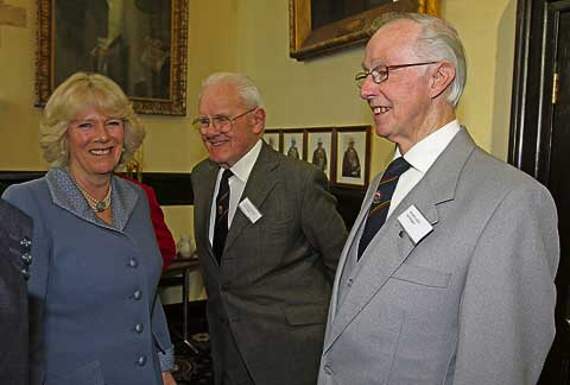
THE Post was saddened to hear of the recent death of former editor, Arthur Bate Venning.
Described by former colleagues as a ‘loyal Launcestonian’, Mr Venning died at home on February 26.
Mr Venning, who was born in 1919 above the shop ran by his mother in Launceston Town Square, was the son of Mr and Mrs Arthur Bray Venning, and a brother to Marjorie. He married Vera Chudleigh, of Cross Lanes, and they were married for around 72 and a half years.
He was educated at the Misses Bennetts’ primary school, Dunheved College and later at Launceston College under Spencer Toy, whom Mr Venning succeeded as honorary borough archivist.

He was well known for editing the Post from 1960 until he retired in 1984 at age 65 — he spent his professional life at the paper, apart from six years’ war service in the Army.
He had followed his father into the Post, who had been a minority shareholder and manager of the advertising side of the business.
Mr Venning had been regional chairman of the Editors’ Guild and president of the South West Federation of the Newspaper Society.
Named a Bard of the Cornish Gorsedh in 1969, he was given the Bardic name Dyller Dunheved — meaning Launceston Editor.
He was a trustee of several foundations, including the Eventide Trust, which included the Launceston Relief in Sickness Fund. At a meeting last year, the Eventide Trust made Mr Venning an honorary trustee.
With an enthusiasm for sport, he was one of the co-founders, past captain and chairman of Launceston Rugby Football Club in 1948 and was a former captain of Launceston Golf Club (1985), president (2000-2002), and seniors’ captain (1989).
In 2000 he was made honoured burgess of the town, an award made in recognition of significant service made by an individual to the community over a considerable period of time.
Mr Venning leaves two sons, grandchildren and great grandchildren.
Bill Roberts, who worked with Mr Venning for 20 years, said: “He was very fair. He was very genuine and first and foremost a true loyal Launcestonian, and a good Cornishman.”
As former Post editor and colleague of Mr Venning, Colin Brent, writes below ‘the loss of Arthur Venning means the loss of a loyal link with the past’. We must heed Mr Venning’s own words, from The Book of Launceston: “If you don’t write it down, your memories will be lost and with them, Launceston’s twent
Comments
This article has no comments yet. Be the first to leave a comment.