
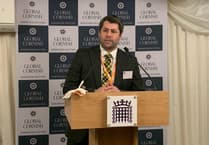
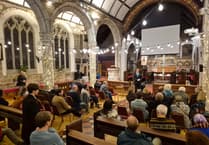
‘THE bottom line is the money’ — Cornwall Council leader Adam Paynter was on hand to talk through the local authority’s budget for 2019/20 at the most recent meeting of the Launceston Community Network Panel on December 13.
Chairing the meeting in the absence of Cllr Neil Burden, vice chair Cllr Paul O’Brien introduced Cllr Paynter (Lib Dem), Cornwall Councillor for Launceston North and North Petherwin, to the panel and members of the public.
Cllr Paynter said that in order to draft the budget, the local authority has been listening to residents across Cornwall in order to list the six main points that communities feel should be improved and invested into — these were affordable housing, road repairs and highways, hospital and GP services, public transport, wages and the cost of living. “This process has helped us draw up our priorities,” Cllr Paynter said, of which are set in five different categories.
“There are many challenges in Cornwall — the economy is still underperforming compared to the national economy,” he told the meeting. “Cornwall’s population is growing, and our population is also growing older, which puts pressure on our services, thus putting pressure on the budget.
-Cllr-Leigh-Frost-Jayne-Kirkham-MP-Perran-Moon-MP-Noah-Law-MP-Gus-Grand-Piers-Guy-in-a-geotherm.jpeg?width=209&height=140&crop=209:145,smart&quality=75)
“Last year we ran our fairer funding campaign, and when you compare us to other areas of the country, we are still not getting fairer funding. The government recognised we need more money, and the money we should have had didn’t come in.”
He revealed that Cornwall Council would have had an extra £39-million if they had received the average level of funding, but that the authority is keen to look to do the fairer funding scheme again in the new year.
Cllr Paynter said that the settlement for police has seen an increase, with the force having freedom of charging more council tax. He added that in December 2019, the council should know what the settlement will be, with an increase in funding for rural areas.
The adult social care precept of 2% will help fund increasing demand, and funding will also be invested into road maintenance, with potholes being ‘a real problem’, causing a lot of damage across Cornwall. The meeting heard that £10-million was invested for road maintenance in 2018, with an extra £10-million to be used by the authority for the next two years.
There has been ‘a continued delivery of housing, which the council have been doing in Launceston and across Cornwall’, with Cllr Paynter adding: “There is a huge housing need right across Cornwall.”
With the need to reduce council spending by £70-million over the next four years, the meeting was shown a break-down of the five main areas in which the budget is delivered, with the aim to become self-financing, learning that 27% is from council tax, 17% from business rates, 45% from government grants, 10% from fees and charges, and 1% from income generated directly from the council. Children and young people is the biggest area invested into, receiving £244-million.
Cllr Paynter said the total budget comes to just over £1-billion. In 2009, when Cornwall Council was first created, the authority was given £364-million in government grants, and approximately £350-million in savings on the budget has been made by the authority since that year.
From 2020, the council is to be funded by local taxation, with ‘the ambition to be self-sufficient from April 2022’. This gives the council a four-year budget to develop and work with, with large savings to be made during this time.
“The budget setting process started in September, and we looked at ways of where we should make cuts and increases,” Cllr Paynter said. “In mid-November we had a comprehensive impact assessment, which looked at losing a lot of staff and the impact this will have on people.”
The public consultation period came to a close in December, with the budget impact assessment to be completed in the new year.
The meeting heard that adult social care has seen an increase of 12%, while the children and young people’s budget has seen an increase of 9% over the four-year period. Meanwhile, the empty homes premium has seen a shortfall of £700,000. Properties council tax will increase by 3.99% — for example, a band B property would be required to pay £45.57 a year, equalling to 88p per week.
Although the local authority has not overspent, they still are required by law to reduce their £2.5-million budget.
Comments
This article has no comments yet. Be the first to leave a comment.