
THE dunes at Summerleaze, Bude, have recently undergone some surveillance work, in an aim to identify and understand species living here.
-and-Harry-(left).png?width=209&height=140&crop=209:145,smart&quality=75)



The topping of the Summerleaze dunes, to improve the view from the RNLI lookout, has not affected the biodiversity of this unique habitat as a whole. Bude Marshes Survey Group was joined on its annual survey by Simon Browning, Bude town councillor, and Bob Meredith, from Friends of the Earth, to help with surveying, identifying and quantifying species.
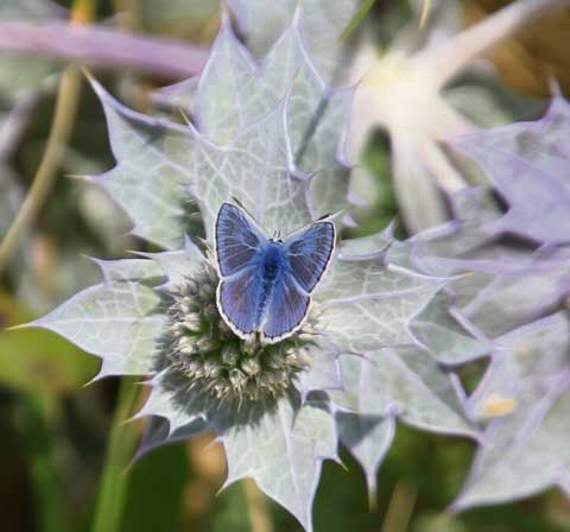
All the usual sand dune specialists — marram grass, sea holly and sea spurge — are still thriving, but the group still managed to add 15 new species to its cumulative list, which now totals 88 species.
Not so reassuring is the continued invasion of garden species along the unmanaged car park edge. Alyssum, cotoneaster and other invasive shrub sand plants are all well established with a new and threatening species appearing for the first time — Hottentot Fig. this is a Countryside and Wildlife Act Schedule 9 species, which will have to be removed before it dominates the whole habitat.
On the positive side, the progression of the sand dunes continues with marram and sea holly well established and new ground cover developing on the established dunes. A small, but growing, patch of sand dune screw moss has established since last year, further consolidating the sand.
The bees were abundant on the flowering sea holly, and a new small colony of silvery leaf-cutter bees was found to be thriving.
Comments
This article has no comments yet. Be the first to leave a comment.