
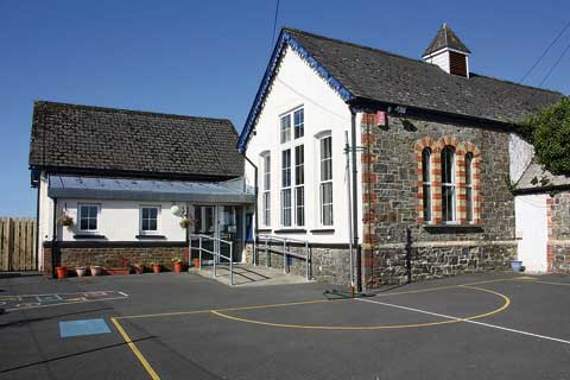
FIVE schools have closed in five years in Devon — and one resident asked county councillors last week if her village’s primary would be the next.
Devon County Council’s cabinet is set to decide next month whether Sutcombe Primary School should close.
A consultation period, where representations could be made to the council on the possible closure of the school, ended earlier this month.
Sutcombe Primary has capacity for 56 pupil places for boys and girls aged four to 11, but Devon County Council said pupil numbers have fallen over recent years, and are not forecast to improve.
.jpeg?width=209&height=140&crop=209:145,smart&quality=75)

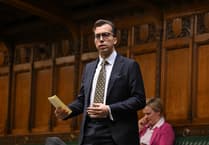
Parent Becky Whinnerah attended the county council’s meeting last week, where she handed over a petition, calling for the school to remain open.
She asked councillors: “West and East Putford, Clovelly, Great Torrington Junior School, Broadwoodwidger, Pyworthy — five schools in five years, all in the Torridge District, shut. Will Sutcombe School be the sixth?
“In total, according to your website, ten schools have been shut since 2010. Torridge has clearly borne the brunt of this raft of closures with half being in its district, despite it being just one eighth of the county.”
She said she felt parents’ choices, if Sutcombe School should close, were ‘bleak’, and when living in East Devon and her children’s first school was closed, they had a choice of around ten alternative schools within a four-mile radius.
Mrs Whinnerah added: “With Sutcombe, it is a Hobson’s choice of not quite two — Bradworthy Academy, already full in some years, and Holsworthy Primary, a large school, similarly close to capacity.
“It is possible siblings may even end up not being able to attend the same school.”
Torridge is listed as 17th in the ‘worst performing 20% of authorities’ or ‘social mobility coldspots’ in the recently published Social Mobility Index.
Mrs Whinnerah added: “Clearly we need our young people to have the best start and turn this statistic on its head.”
She also expressed concern with new homes due to be built: “640 homes are due to be built in our area. Why would people bring their families here if there are so few schools? That’s a lot of lost council tax.”
As its reasons for closure in its proposal document, the council said: “The school has been in a management partnership which will not be continuing and it has not been possible to secure leadership for the school, which is a statutory obligation.
“It has also not been possible to secure a sustainable partnership agreement with other schools. Without appropriate leadership and the low pupil numbers, the school will inevitably not find it possible to deliver a full and balanced curriculum and is unable to set a balanced budget.”
Mrs Whinnerah said she also felt the argument for closing the school has been ‘successfully rebutted’: “We have leadership, numbers have risen and we are Ofsted rated as ‘Good’.
“Therefore the only argument for closure is our deficit. According to my research, presently around 40% of Devon schools are carrying a deficit, with this projected to rise to 85% within two years.
“With the best will in the world, councillors, it is clear that closures of all schools with deficits is untenable. It is your job to find another way.
“We are a very, very close knit, friendly, supportive village, but the glue that binds us is the school. Councillors, I’m sure you are deeply proud of Devon’s rural communities — closures of small schools genuinely hit us very, very hard.
“You are our representatives and we have entrusted you with the responsibility to preserve our way of life. The choice, councillors, is in your hands.”
Christine Channon, chairman of Devon County Council, expressed thanks to Mrs Whinnerah for her presentation, adding: “You will be hearing from us in due course.”
Holsworthy Rural’s Conservative county councillor, Barry Parsons, who is a member of the county council’s cabinet, has asked to step out when the cabinet considers the future of Sutcombe School, so that he can ‘sit in support alongside individuals from Sutcombe’.
He told the Post: “I am, personally, very unhappy about the situation generally in relation to the closure of small rural schools.
“I have witnessed, first hand, the impact on rural communities it effects. It has an enormous, to date, not fully recognised impact on small rural communities — not to mention the possible impact(s) (educational/social for example) on young children being forced to change school.
“There is, in my opinion, much to be done along these lines in terms of assessment.”