
EACH week, hundreds of planning applications come before Cornwall Council’s planning department, seeking to win approval for various plans right across the Duchy, with some concerning Holsworthy handled by Torridge District Council.
These plans can comprise of a number of different reasonings– ranging from permission to replace windows or listed building consent ranging up to large house building developments or changing of use of a building, for instance, from an office to a café, or flats.
Within this large and often complex system, there are a number of formats from which planning advice and approval can be sought.
These range from full applications where all the details which comprise a proposed development or work to a building are submitted, to outline applications, where further details are yet to be confirmed, for example, an outline application with reserved matters for appearance may not confirm the final proposed development but rather seek permission in principle.


An example of this is one for an outline permission for 20 dwellings on land with reserved matters for appearance and scale; the reserved matters would require further permission later for their inclusion.
Other types of applications include pre-application advice requests, where would-be developers submit often outline proposals to a local authority to ascertain whether it is likely to gain support or not prior to submitting a planning application.
The vast majority of applications are decided by planning officers employed by a local authority under ‘delegated powers’, meaning they do so on behalf of their employer, however, some applications are ‘called in’ by local councillors to be discussed at an area’s strategic planning committee meeting, meaning the final decision rests with a committee of councillors.
Roof plans to protect historic building
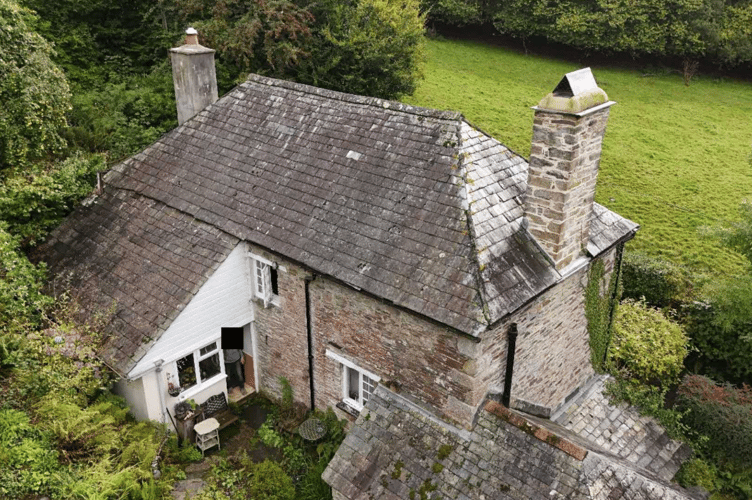
PROPOSALS seeking listed building consent to re-roof a property to ensure it remains weather tight and prevent the loss of ‘historic fabric’ for a Grade II listed building in Launceston has been the subject of an application to Cornwall Council.
It concerns a property at the address of Battens Mill, Mill Lane, North Hill, Launceston and the application was made by Mr Tim Vian.
The building at Battens Millhouse was constructed in 1702, according to documents submitted as part of the application.
However, the current roof has begun to fail, with the applicant providing evidence of day light being visible from the inside of the roof meaning that without the works being applied for, the roof is likely to deteriorate further leading to potential damage to the historic fabric of the property.
The applicant’s planning agent told Cornwall Council: “The walls are predominantly solid stone construction. The roof is close mitred hipped and covered with a local slate which is laid to random width diminishing courses with grey angular ridge tiles. Slate has been directly nail fixed to common rafters. To the rear there is a single storey lean to roof. To the southwest there is a single storey wood store and privy. These have been recovered in the past with a modern felt incorporated.
“There are two number chimney stacks. The southwest chimney (left hand taken as if facing the front elevation) is constructed from exposed stone. The northeast chimney is rendered. Rainwater goods are a mixture of Cast Iron mounted on rise and fall brackets and Plastic, mounted on softwood fascias.
“The fixings to the slate roof covering have now reached the end of their lifespan, with the majority of the roof in a distressed state and with a number of broken and slipped slates. There are numerous lead tingles evidencing previous repairs. This requires renewal in order to protect the historic fabric of the building.
“The proposal relates to the re-roofing of the property to ensure it remains weather-tight and prevent loss of historic fabric, in particular the unnecessary loss of the roof timbers.
“The proposal is to carefully strip the roof and re-slate, copper nailing natural slates to battens. The existing slates will be re-used as far as possible, laid in coursing to match existing.
“Any deficiencies from breakages will be made up from reclaimed Cornish slate from the existing estate stock.
“The proposal will have a positive impact with the repairs securing the integrity of the building and reinstating the original appearance of the roof.
“As the slate is being re-used there will be minimal loss of historic fabric. However, if the roof is not recovered in the immediate future, then it will result ultimately in the loss of historic fabric.
“The proposed works are essential to maintain the weather tightness of the building. The principle of reusing the existing slates, relaying them with copper nails in coursing to match existing will ensure that the original appearance will be maintained, and the loss of historic fabric will be kept to a minimum.”
The proposals can be viewed using the planning reference PA25/08719 and are currently under consideration by Cornwall Council.
Plans for dwelling near Bude
AN application seeking permission in principle for the construction of a single detached dwelling at Crosslands Shop, Morwenstow, Bude has been submitted to Cornwall Council.
Permission in Principle is sought for this application, meaning that the applicant is seeking to see if the principle of a dwelling on the land would be supported by the council and if granted could be the subject to a later full planning application once the principle of development being acceptable on the land is established.
The applicants agent told Cornwall Council: “This Supporting Statement accompanies a Permission in Principle (PiP) application submitted to Cornwall Council for the development of a small two-bedroom eco-friendly dwelling within the existing residential garden of Crosslands House, Shop, Morwenstow, Bude on behalf of Mr and Mrs N Gregory who have lived at Crosslands House along with their three children for the past fourteen years.
“The application seeks to establish the principle of residential development on the site. Detailed design, layout, scale, appearance, and landscaping matters will be reserved for a later Technical Details Consent (TDC) application. The proposal represents a sustainable, modest infill opportunity that aligns with national and local planning policies, utilises an existing access, and supports the vitality of the local rural settlement.
“The proposal seeks Permission in Principle for the erection of one small, two-bedroom eco-friendly dwelling within the garden of Crosslands House.
“Key Parameters: - Use: Residential (C3).
“Scale: Modest two-bedroom home suitable for a small household.
“Access: Via the existing vehicular entrance serving Crosslands House – no new highway opening required.
“Frontage: Maintains direct road frontage with good visibility.
“Design Intent: To deliver a sustainable, low-carbon dwelling utilising modern construction methods and renewable technologies.
“The proposed development would form a logical and proportionate addition to the settlement pattern of Shop, reinforcing its role as a small but sustainable rural community.
“The dwelling will be modest in scale and carefully positioned to avoid overlooking or overshadowing neighbouring properties. Garden space and existing boundary treatments will be retained to preserve privacy and greenery.
The proposal can be viewed on the Cornwall Council planning portal using reference PA25/08628.
- Keep up to date with the latest planning applications and other statutory notices (such as alcohol licensing and probates) that affect where you live by visiting our online Public Notice Portal – be the first to know by visiting www.publicnoticeportal.uk/cornish-and-devon-post-series
Comments
This article has no comments yet. Be the first to leave a comment.