EACH week, hundreds of planning applications come before Cornwall Council’s planning department, seeking to win approval for various plans right across the Duchy.
These plans can comprise of a number of different reasonings– ranging from permission to replace windows or listed building consent ranging up to large house building developments or changing of use of a building, for instance, from an office to a café, or flats.
Within this large and often complex system, there are a number of formats from which planning advice and approval can be sought.
These range from full applications where all the details which comprise a proposed development or work to a building are submitted, to outline applications, where further details are yet to be confirmed, for example, an outline application with reserved matters for appearance may not confirm the final proposed development but rather seek permission in principle.
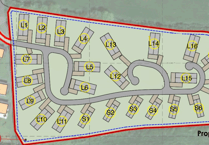

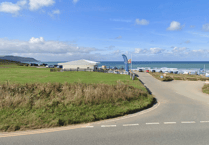

An example of this is one for an outline permission for 20 dwellings on land with reserved matters for appearance and scale; the reserved matters would require further permission later for their inclusion.
Other types of applications include pre-application advice requests, where would-be developers submit often outline proposals to a local authority to ascertain whether it is likely to gain support or not prior to submitting a planning application.
The vast majority of applications are decided by planning officers employed by a local authority under ‘delegated powers’, meaning they do so on behalf of their employer, however, some applications are ‘called in’ by local councillors to be discussed at an area’s strategic planning committee meeting, meaning the final decision rests with a committee of councillors.
Dwelling refused over road safety
PROPOSALS seeking the approval of Cornwall Council for an ‘infill self-build dwelling, a car parking space and passing place’ in Seaton has been refused by Cornwall Council.
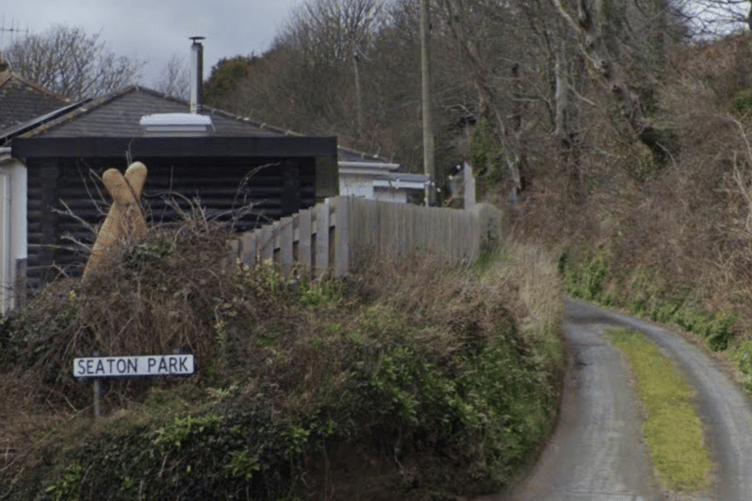
The applicant’s planning agent told Cornwall Council: “The applicants wish to make use of the site which is situated in a residential area surrounded by residential properties, residential gardens and with access to the highway, Tregunnick Lane to the north and pedestrian access to Seaton Park to the South.
“The proposal includes a pull-in area to the North in order to assist with improving highway safety for motorists using Tregunick Lane. It also includes a pedestrian access to Seaton Park to ensure that highway safety for pedestrians is maintained and the sustainability of the property is enhanced as this will ensure that the occupants easy access to local amenities.”
There were 33 objections to the proposals, while 29 members of the public wrote comments in support.
Deviock Parish Council also added to the objections, stating that while it applauded the design and scale of the property, it did not think that the location proposed was suitable.
Among the concerns shared by the council’s planning department was that Tregunnick Lane, the road next to the proposed property is a ‘particularly tight and steep lane’ which offered little opportunity for vehicles to pass each other.
The applicants had stated that their development would incorporate a passing bay, but Cornwall Council said the application was not supported by a transport assessment so there was no guarantee it would provide the necessary width and length.
Further, the council observed that as it would not technically be highway land and thus public road, it would be an amenity that was not in the control by public authorities and thus could be revoked at any time.
They added that ‘the use of planning conditions would not be an appropriate mechanism to secure this measure given it would likely fail some of the six tests’.
Refusing the application, Cornwall Council stated: “The proposed development would result in an unacceptable impact on highway safety. The site is served via Tregunnick Lane, a narrow, steep and constrained section of highway with limited opportunities for vehicles to pass and poor conditions for pedestrian movement. The proposal would introduce additional vehicular movements onto this section of road, and the proposed mitigation, including the provision of a passing bay, is not considered sufficient to overcome these constraints or to ensure safe and suitable access for all users. The development therefore fails to demonstrate that safe and suitable access to the site can be achieved and would result in an unacceptable impact on highway safety.
“The proposed development, by reason of the introduction of an engineered access, passing place and the loss and repositioning of a traditional Cornish hedgebank, would erode the rural character, distinctiveness and sense of enclosure of Tregunnick Lane, and would result in harmful visual impacts within the surrounding landscape. The proposal fails to conserve and enhance the natural environment and local character of the area, including the Area of Great Landscape Value.”
Dwellings on Bodmin Moor approved
THE creation of five dwellings on a Bodmin Moor farm yard has been approved by Cornwall Council’s planning department.
Messrs. Rob and Wayne Davey submitted proposals seeking the creation of five dwellings on the site at Hill Farmyard, St Breward.
The five dwellings would comprise of one dwelling formed from the conversion of the existing retained stone barns with four new dwellings which would replace the ‘modern agricultural barns’.
The applicant’s planning agent told Cornwall Council: “The proposal seeks planning permission for the redevelopment of Hill Farmyard, a brownfield site within the built form of St Breward.
“The redevelopment proposals comprise five dwellings. Four are proposed to be delivered via new build dwellings replacing existing agricultural structures, with one. delivered via the adaptive re-use of the existing - more historic - stone built barns on site.
“The proposed replacement dwelling represents a clear enhancement, responding positively to the constraints and opportunities of the site and its setting. The development layout is based upon a traditional rural courtyard farmstead arrangement, scale and materiality, enhancing the character and appearance of the street scene and respecting its rural location.
“The proposal has been carefully designed to protect surrounding natural features and to provide appropriate outlook and residential amenity. The development makes effective use of the site by replacing the existing redundant agricultural building with high-quality, architecturally designed homes.
“Together with the proposed landscaping, the scheme delivers a resilient, sustainable and long-lasting form of development, improving the quality of the local housing stock.”
Five residents objected to the proposals on various grounds, mostly ranging around the increase of traffic on the roads.
Other reasons for objections from the five objectors included the ‘destruction of wildlife’, the ‘spoilage of aesthetics’, parking, the houses not being designated ‘affordable’, ‘too many houses’, and the access near to a primary school.
St Breward Parish Council said it had no objections to the scheme.
However, these objections were not seen as sufficient grounds for refusal by Cornwall Council who approved the scheme, concluding: “The application provides five new dwellings within an established settlement with access to services and facilities for day to day living as well as the ability to use sustainable modes of transport. The site is therefore considered highly sustainable and in accordance with housing policies within the CLP and the tilted balance of the NPPF.
Find out about planning applications that affect you by visiting the Public Notice Portal.
“The conversion of the three barns to one dwelling makes good use of redundant buildings in a sympathetic manner and the four new dwellings have been designed to minimise impact through the material palette.”
Comments
This article has no comments yet. Be the first to leave a comment.