
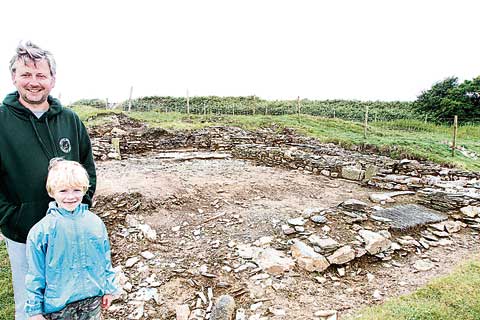
ARCHAEOLOGISTS want to build a North Cornwall research centre following the discovery of a 13th Century settlement on land in Slaughterbridge, near Camelford.
Evacuation work on the land has found references to a village that dates to around 1296. Items including a coin and pot dating back to the 13th century have been found on the site, as well as a lada and a fireplace.
North Cornwall Heritage (NCH) is applying for funding to the centre and member, Joe Parsons, who owns land which is being excavated, said: "We've uncovered areas of the farm with references to a village in 1296, but there's no mention of who lived here, so we're digging to find out more.
"We've realised from this site that there's so much more going on in the area — it's got a fascinating past."

.jpeg?width=209&height=140&crop=209:145,smart&quality=75)


He added: "We've put together a business plan and we're trying to sort out funding."
Currently the site is being excavated by volunteers, but NCH want to create a research centre for archeologists and students to use as well as a visitor centre.
Dr Niall Finneran, head archaeologist at Winchester University, said: "What we have here is part of the regional farming system and a building showing someone very important lived here.
"It's beginning to shed light on life in the late 13th century, so we're really beginning to put the site on the archaeological map."
Long term plans regarding the site include the construction of a replica medieval farmstead based closely upon the data yielded by excavations at Old Melorne. Inside, visitors will be able to see the recreation of everyday domestic life in the middle ages and are encouraged to participate in activities which would have formed a crucial part of the local industry during the medieval period. There will also be battle re-enactments and celebrations hosted by NCH to mark important days and festivals in the traditional ritual calendar.
An NCH spokesperson said: "As we continue this important work, we will be providing exciting educational opportunities, not only for the archaeology students who will be working on the sites, but for schools, local interest groups and the public.
"From a focussed, volunteer-led start we hope to ultimately grow into a large and inspiring educational centre, bringing the past to life through meticulously researched, authentic reconstructions, whilst continuing the academic research and exploration that feeds our growing understanding."
He added: "We have planned a permanent museum, display, shop and archive centre and computing hub. Also planned is a café area.
DEDICATED
"A dedicated multi-media teaching suite will enable teaching and conferencing to take place in comfortable surrounds, and for those wishing to take advantage of our residential archaeological and historical study programmes there will be basic sleeping accommodation in dormitories with kitchen, toilets and showers. This building will be a thriving teaching and community centre open to all."
Comments
This article has no comments yet. Be the first to leave a comment.