
THE loss of community hospitals in Cornwall ‘would be a very sad thing’, NHS representatives were told at a meeting in Launceston recently.
But Karen Kay of the NHS Kernow Clinical Commissioning Group and Dr Lou Farbus, NHS engagement lead from the Shaping our Future team, assured the town’s Community Network Panel on December 14 that although ‘at some point we need to do things differently and close things we can’t use appropriately’, there would be no closures of facilities until appropriate alternatives are in place.
‘Shaping our Future’ is the programme of work that involves all the major public sector health and care organisations, who in November 2016 published an outline plan to improve services based on the NHS England Five Year Forward View and Devolution Deal for Cornwall.
Dr Farbus said our current system of having minor injury units and A&E departments is ‘really complicated’ and said her colleague Karen Kay, director of commissioning for the CCG, is looking at ‘how can we provide the support people need in a simple way’.



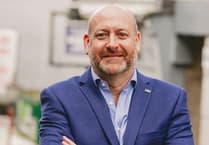
“Her team is working on urgent treatment centres (UTCs), very like minor injury unit plus. MIU and an awful lot of what you get in A&E. The thorny issue there is where we put those.”
Ms Kay added: “On the urgent treatment centres work, we are working on the basis of 18 sites, three of which are in Devon.”
There have been calls locally for an urgent treatment centre to be sited at Launceston.
Joan Heaton, St Stephens by Launceston Rural Parish Council, explained to the panel that her husband is unwell, and she drives him to various hospitals for treatment, including Derriford.
She said: “We are a rural community so there’s a long way for people to travel, that leads to a great deal of concern. I’m lucky, I can drive, I can take my husband. So many people can’t and can’t afford it.
“The community hospitals we have already could be utilised so much better and retained. Consultants at Derriford want to come to our hospitals. It works. One person coming to a community hospital seeing 50 patients is better than 50 patients going to Derriford and costing a fortune.
“I find a lot of elderly people are giving up. They are not going for treatment. They are too tired. They are too sick. We all want our NHS. I just want a service for people, we can all work together on that, but I think losing our community hospitals would be a very sad thing.”
Dr Farbus said: “We are all experiencing the effects of austerity. We need to do something to address things like increases in our demands for services. The money we have for them is going down quite considerably.
“We are having less and less money so at some point we need to do things differently and close things we can’t use appropriately,” but Dr Farbus stressed there would be no closures of facilities until appropriate alternatives are in place. Ms Kay added they knew they ‘won’t get it over the line’ until alternatives are in place in the community.
Dr Farbus continued: “The Government asked all 44 STP [sustainability and transformation partnerships] footprints in England to look at how we can transform these services, make sure they are improved where they need to be improved.
“We are running a programme of four waves of coproduction — i.e. redesigning services, or trying to, or thrashing out ideas.” The first coproduction workshops were in July and September, at which there have been representatives from Launceston.
Dr Farbus said as information is gathered, the Shaping our Future website is updated on a daily basis ‘where you will find everything that you may or may not want to know’. The website is: www.shapingourfuture.info
“I don’t want anybody’s views to be suppressed. Every word we noted at these events is in those reports [on the website].
“We have learned loads by listening to the people that live here and work here.”
Dawn Rogers of South Petherwin Parish Council asked: “It comes down to pounds and pence and where will that money come from?”
Ms Kay said: “Most people who work in healthcare see duplication and waste. This is not about spending more money on more things. It’s taking the hundreds of millions of pounds we spend and doing something better with it. We don’t do anything like we should be doing if you compare us to other areas.”
She said in future we ‘might not need so many MIUs because the offer we have for you will be so much better, you will be more prepared to travel for it’.
“One of the things we will consult on is what is a reasonable travel time for an urgent treatment centre,” she added.
There will be another wave of coproduction workshops this year before a programme of public engagement, which will include events such as was held in January of last year at Bude. That event was a ‘disaster’, said Dr Farbus. “The reason it didn’t go very well, the team were so keen to talk to the public but hadn’t realised the public wanted to ask questions. We looked like we couldn’t answer questions, that we didn’t know what we are doing.”
Ms Kay said at the Crackington Haven event, someone said to her ‘don’t you stand there and tell me you haven’t already made a decision on a model of care’. “If only we had!” she said.
Ms Kay added: “We want to come to you and get you to help us build it.
“We are using public money and dealing with people’s lives. We have got to be brave but we are worried about getting it wrong.
“I really want to spread the load and hear from people who use it, work in it, so we stand a better chance of getting it right.”
The NHS representatives said they would welcome anyone’s thoughts and ideas to the central email address: [email protected]
Comments
This article has no comments yet. Be the first to leave a comment.