
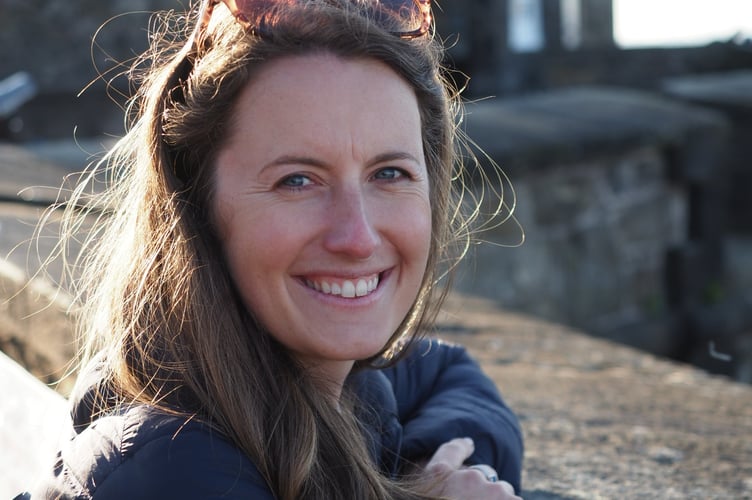
FOR years, Amy Mowbray measured her life in missed moments.
Missed work. Missed birthdays. Missed ordinary evenings that most people barely notice.
Today, from her home in South East Cornwall, she is helping nearly 50,000 people around the world avoid losing those same moments to migraine.
However, rewind to January 2, 2015, and her world looked very different.




“I woke up with a headache that just didn’t go away,” she said. “I thought it was a delayed hangover from New Year’s Eve. I remember going out for this walk in really like icy wind and just thinking ‘I don't feel right at all’.
“I did all the usual things you know, but I just thought I was tired and travelled back to London. I got back into the swing of things with work, but this headache just persisted day in, day out. It was then I thought ‘this is a bit strange’, but I just kept powering through for a few weeks.
“At that stage, I just thought it was a headache because it wasn't coming with any more alarming symptoms for me. In the past I had periods where I would get them – that was during my teens, again at university after I handed in my dissertation, so I kind of thought maybe it's something like that and it will pass.
“In the end, I was getting gradually more and more unwell and then one day on the way to work, I got off the train at Clapham Junction, I turned around and I was like ‘enough is enough’, I've got to go and see the GP, this is not normal.”
Within three months, Amy was living with constant head pain – 24 hours a day, seven days a week. On top of that came full-blown migraine attacks, sometimes up to 20 days a month.
“These were completely debilitating,” explained Amy. “I was in bed most of the time, certainly when I had an attack. Movement was hard, lights were too bright and even small sounds several rooms away would aggravate my head.”
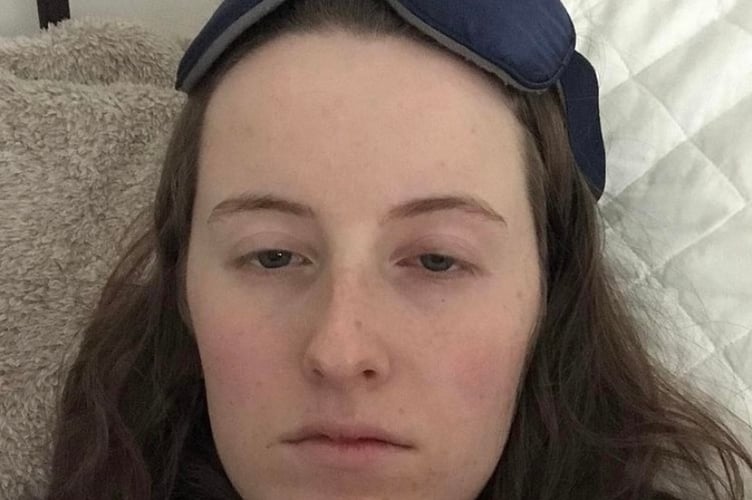
Socialising became impossible. Exercise stopped. Friends visited her in her bedroom because going out often triggered days of worsening pain afterwards. She even wore earplugs while eating to tolerate the sound.
Her journey through the healthcare system was equally frustrating. Initial GP visits led to ineffective painkillers. A neurologist ordered urgent scans after spotting potential issues behind her eyes – a terrifying few days that ultimately ruled out more serious causes.
“When the MRI came back clear, I felt this strange disappointment,” she admitted. “I wanted them to find something. I didn’t understand that migraine could be this severe.”
Eventually she was diagnosed with migraine and later chronic migraine. But treatment was complex. Preventative medications brought little relief. For more than seven years, she lived with daily pain.
“You’re always waiting for it to tip into the next attack,” she said. “There’s no real break. You’re constantly on edge.”
One of the biggest misconceptions she encountered was around “triggers”.
“You’re told to avoid triggers and you’ll be fine. But when you have chronic migraine, everything feels like a trigger,” she explained. “It becomes impossible.”
Through education and working with specialists, Amy began to understand the idea of a “threshold” – that attacks often come from an accumulation of factors rather than one single cause.
“That took so much blame off me,” she said. “It stopped me feeling like I’d failed every time I had an attack.”
In 2016, during one of her lowest points – in a dark room, mid-attack – she made a decision that would change everything.
“I was a year into my journey of chronic migraine,” explained Amy. “I couldn't use a laptop, I couldn't really cope with my phone for much of the time and I was in the middle of one of the most brutal attacks, which had gone on for two weeks.
“I was also going through a process of trying to cut out caffeine at the time to see if that made any difference, so I was blooming miserable because I had no tea, no chocolate and I had this awful attack.
“I just remember lying in bed thinking ‘there must be someone else out there who knows what this is like’ so I created an Instagram account called The Migraine Life.
“There was no business plan. No long-term vision.
“I just wanted to find one other person who understood what I was going through. In time, that grew into finding tens, then hundreds and then thousands of other people from all around the world who I’m now connected with.”
People from across the UK and beyond began sharing their stories. Young professionals who had lost jobs. Parents struggling to cope. Students confused by symptoms that didn’t match the stereotypes.
“It somehow felt safer to be vulnerable online,” continued Amy. “I was sharing in my pyjamas, in the middle of attacks. But people understood.”
What started as connection grew into advocacy. Amy began volunteering with migraine organisations. She immersed herself in research. She shared what she was learning about lifestyle changes, stress management and working with doctors.
Gradually, her attacks reduced. By 2020, they had dropped from 20 a month to around 10. She had moved to Cornwall, a place long connected to her family.
“Lockdown didn’t look that different for me,” she said. “I’d already spent years at home.”
Then came a breakthrough she once thought impossible: the daily background pain finally stopped.
“That was incredible,” she said. “After seven years, you start to believe it’s permanent.”

Now in recovery for the past two to three years, Amy no longer lives with chronic migraine. Some months pass without attacks at all.
“I don’t take migraine-free days for granted,” she said. “Routine is still key – sleep, regular meals, managing stress. The migraine brain loves stability.”
As her health improved, she considered stepping away from the migraine world completely.
“I thought maybe I could just be Amy again,” she said. “But I realised I couldn’t walk away without sharing everything I’d learned.”
Today, her Instagram community is approaching 50,000 followers. She works as a migraine coach and advocate, helping people navigate diagnosis, treatment options and the emotional toll of the condition.
She is also supporting the ‘There’s More to Migraine’ campaign – launched recently by Pfizer – which highlights the hidden impact of the disease. A key part of the initiative is a free online migraine diary designed to help patients record not just attack frequency but daily symptoms and life disruption – improving conversations with GPs.
“So many people underreport,” she said. “If you only log the worst days, you miss the full picture. And that can affect diagnosis and treatment.”
For Amy, the most important message is that migraine is more than “just a headache”.
“It affects work, relationships, confidence – all the small moments that make up your life,” she said. “And it’s still so misunderstood. I started out just wanting to find one person who understood. Now, if someone scrolling at 2am feels less alone because of something I’ve shared, that means everything.”
After years defined by pain, Amy is finally measuring life not in what she’s missed – but in how many people she can help move forward.
Comments
We've recently changed our login process. If you have an account for commenting, you will need to re-register on the login window.
This article has no comments yet. Be the first to leave a comment.