
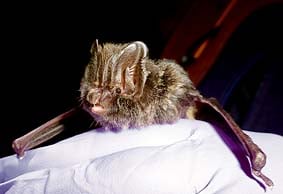
HEREFORDSHIRE Mammal Group (HMG) in association with the Forestry Commission, have published the results of their 2013 bat survey – which shows that all 15 British bat species live within the county.
A total of fifteen trapping surveys have been carried out in Forestry Commission woodlands: Haugh Woods near Woolhope, Frith Wood near Ledbury and Chase and Penyard Woods, near Ross-on-Wye, where two thirds of Herefordshire's bat species were recorded, including the very rare Barbastelle, Bechstein's and Lesser Horseshoe bats.
The survey shows that a large number of breeding female bats was recorded, particularly in Frith Wood, suggesting that they were breeding in trees in the woodland.
Denise Foster, HMG's bat co-ordinator said: "Female bats gather together in the summer to have their babies. Since bats produce only one baby at a time and may not breed every year, finding breeding females is important information for woodland managers to know, particularly if they are actively felling timber. If a tree containing a maternity roost is felled or disturbed then this may have a dramatic effect upon the local population of the species that would take many years to recover."



The results from the surveys so far have helped to guide management of the woods, in particular avoidance of felling in sensitive areas of Frith Wood, where bats are believed to breed.
Forestry Commission West England District has provided 115 bat and dormouse boxes, which will be monitored by HMG, to further study the distribution of these animals in Frith Wood.
Some of these are wooden boxes which were made by retired Forestry Commission worker Barry Thomas, using long lasting cedar, provided by Woodgate Sawmills of Coleford.
Forestry Commission staff and nine volunteers from the HMG spent two days putting the boxes up in late February of this year.
Kate Wollen from the Forestry Commission said: 'Dormice, like bats, are legally protected and have also been recorded in Frith Wood. Like so much of our native wildlife they need our help in order to survive. These boxes will provide additional safe roosting and breeding sites for both dormice and bats and we are very grateful to the Herefordshire Mammal Group in helping us to do this.
"We look forward to working with the group again during 2015.'
The Herefordshire Woodland Bat Project will continue into 2015 with at least two more Forestry Commission woodlands being targeted for bat surveys.
HMG currently has three major research projects ongoing namely; Woodland Bat Project, Bats and Swifts in Churches Project and they are compiling a Herefordshire Mammal Atlas.
Comments
This article has no comments yet. Be the first to leave a comment.