
Penn Kleger: Penn – headland, Kleger – cliff
what3words - ///immune.afternoon.commented
PENN Kleger yw penn tir gorwiw war an arvor gledh, ogas dhe Borthperan. An ranndir ma o aswonnys rag gwikoryon frank y’n etegves ha nownsegves kansbledhynnyow, gans gogowyow down yn-dann an alsyow, hag o usyes dhe vovya noswara mes a wel dhyworth tollwesyon.
Tirwel Penn Kleger yw gwarthevys gans balweyth. Sten ha tongsten re beu estennys omma dres lies kansbledhenn. Yth esa gweythva daffar tardha dhe’n tyller ynwedh. Moy a- gynsow, yth esa bal yn-dann dhor omma yn askorrans dres Nessa Bresel an Norvys, ow provia tongsten rag alkan arvwiskys ha tanbellennigow. Lies rann a’n framweyth drehevyansow melin goth yw dien hwath.



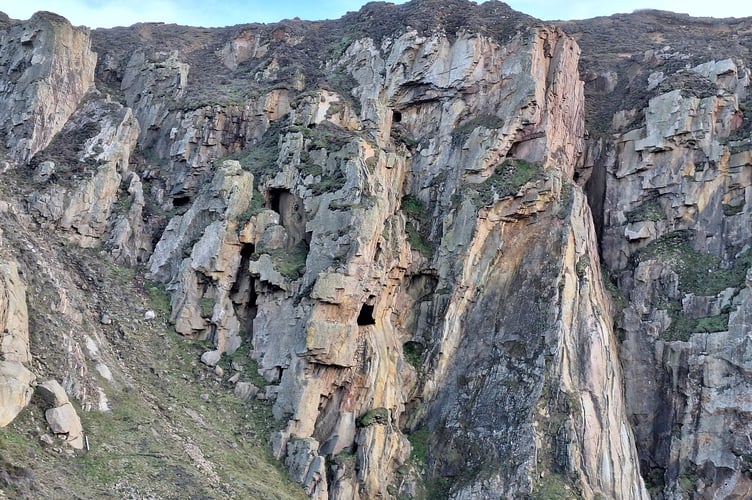
An tyller ma yw aswonnys ynwedh awos y splander dororiethel. Penn Kleger a’n jeves eghen unnik a furvyans growan, gans plegyansow fest kompleth ha skorrennigow growan dihevelebys. Meur a-gynsow, re beu dorslynk bras dhyworth an alsyow a-denewen nans down, ow treustreghi hwelyow koth.
Cligga Head is a spectacular headland on the north coast, near to Perranporth. This area was famous for smugglers in the 18th and 19th centuries, with deep caverns under the cliffs, which were used to move contraband out of sight from Customs men.
The Cligga Head landscape is dominated by mining. Tin and tungsten have been extracted here over several centuries. There was also an explosives factory on the site. More recently, an underground mine was in production here during the Second World War, providing tungsten for armour plating and shells. Many parts of the structure of the old mill buildings are still intact.
The site is also famous for its geological splendour. Cligga Head has a unique type of granite formation, with extremely complex folding and altered granite veinlets. Very recently there has been a large landslide from the cliffs, on the side of a deep valley intersecting old mine workings.
Comments
We've recently changed our login process. If you have an account for commenting, you will need to re-register on the login window.
This article has no comments yet. Be the first to leave a comment.