
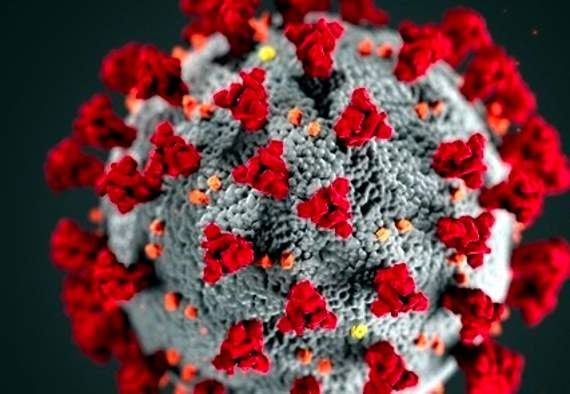
THE COVID-19 outbreak is continuing to make its way across the globe.
There are eight known cases in Cornwall, as well as a twenty in Devon.
Countries are beginning to take action in an attempt to contain the virus and prevent the spread to others. Countries such as China, Italy and Denmark are on ‘lockdown’, while President Donald Trump told US citizens on Wednesday that travel from continental Europe will be banned for thirty days as of Friday, March 13. On Thursday, Ireland announced that schools, colleges, childcare facilities and tourist attractions would be closed until the end of March.
It comes as a surprise then, that the UK government have not followed suit on what is now being deemed by chair of the health select committee Jeremy Hunt a ‘national emergency’, following a Cobra meeting, led by Prime Minister Boris Johnson, last Thursday afternoon.




Mr Johnson told reporters at a press conference on Thursday: “We’ve all got to be clear — this is the worst public health crisis for a generation.
“It is going to spread further and I must level with you, I must level with the British public: many more families are going to lose loved ones before their time.”
He said that from now on, people with even mild symptoms, including a continuous cough or high temperature, must stay at home for at least seven days.
School trips abroad should be stopped, people over 70 with serious medical conditions are being told not to go on cruises, and officials warned the advice is likely to develop so that entire households could be told to self-isolate. But the government saiid it would not move to close schools yet as the evidence for its effectiveness is lacking, though this will be kept under review. It is also considering banning large events, mostly due to the burden such events place on public services.
Health minister Nadine Dorries recently tested positive for coronavirus, while health minister Edward Argar and an unnamed cabinet minister were also forced to self-isolate. Public Health England has been tracing those who had been in contact with Ms Dorries.
Chancellor Rishi Sunak has acknowledged the impact of coronavirus on the government. He told the BBC: “This has obviously now impacted Parliament and government, and we are dealing with it, like all other businesses are going to have to start dealing with it.
“For the various people that have been impacted by this, obviously that work is going on with Public Health England who are going through that process — as they do in all cases around the country — and they are exceptionally good at it, and it’s a very thorough and rigorous process.”
Mr Sunak has said the government would take the ‘right steps at the right time’ but played down the prospect of a US-style travel ban. He continued “We haven’t believed that that’s the right thing to do, the evidence here doesn’t support that. What we are trying to do is contain the virus while recognising it is now likely that it will spread more significantly.”
People who recover from coronavirus are ‘very unlikely’ to contract it again, the deputy chief medical officer for England Jenny Harries has said. It is believed once somebody contracts the virus, their body will build antibodies against it. It is believed that generally, people who contract the virus will see the majority of their symptoms come to an end after seven days.
But she said that ‘a large number of people could get it’ as people will not have antibodies ‘ready-made to it’. She said it was possible that ‘up to 80% of the population’ could contract the virus.
Meanwhile in Cornwall, councillors have been briefed on coronavirus.
According to a Local Democracy Reporting Service (LDRS) report by Richard Whitehouse, concerns have been raised that more precise details have not been released about where the cases are in Cornwall.
Steve Brown, director of public health in Cornwall said: “There are two reasons, the first is that we do not know where these cases are.
“And we are not asking people to change their behaviours. If the public were aware that there is a case in a particular area what would they do about it?
“I understand why people feel they have a need to know but what would they do with that.
“Anybody who has had contact with a confirmed case will be contacted and if you are family or friends who have come into contact they will be contacted.
“But we actually don’t know where these cases are.”
He said that the council was receiving 30 to 40 calls a day and said work was being done to ensure that they have staff to deal with the enquiries.
Mr Brown said that there was also work being done to evaluate what the impact would be on the council should 20 to 30% of its workforce are absent through the illness or having to self-isolate or care for someone.
The council was working to ensure that all services can continue to be provided in Cornwall.
Mr Brown said that the key message which was ‘absolutely critical’ is to encourage the public to wash their hands regularly and thoroughly. He said the council was also working the Local Enterprise Partnership to work with businesses and getting positive messages out about keeping working. But he warned that there would be a ‘big spike at some point’ and the expectation was that there could be a lot more positive cases in Cornwall and said that it was expected that it could last ten weeks.
As the Post went to press, there were 1,543 known cases in the UK, and 55 deaths.
Public Health England advises that people who have returned from Category 1 specified countries/areas in the last 14 days should self-isolate. This includes avoiding an education setting or work until 14 days after they return. People who have returned from Category 2 specified countries/areas in the last 14 days are advised to stay at home if they develop symptoms.
For more information, visit www.gov.uk/government/publications/covid-19-specified-countries-and-areas
Comments
This article has no comments yet. Be the first to leave a comment.