
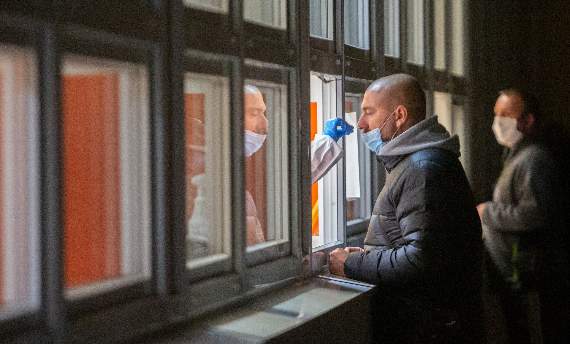
Local authorities will be encouraged to target testing to people who cannot work from home during lockdown.
Around 1 in 3 people have coronavirus (COVID-19) without displaying any symptoms.
The Government says that rapid, regular testing for people without symptoms of coronavirus will be made available across the country from this week, with the eligibility of the community testing programme expanded to cover all 317 local authorities.
The expansion of asymptomatic testing will identify more positive cases of COVID-19 and ensure those infected isolate, protecting those who cannot work from home and our vital services. This programme is crucial given that around 1 in 3 people have coronavirus without displaying any symptoms.


The single most important action we can all take to protect the NHS and save lives, is to stay at home.
The Confederation of British Industry (CBI) has welcomed the announced expansion of mass testing.
Matthew Fell, CBI UK Chief Policy Director said: “Rapid mass testing is a key piece of the puzzle when it comes to getting on top of the virus. The health and safety of staff is paramount for employers, which is why they will be right behind this initiative.
“This expansion of testing will help more critical workers and those unable to work from home to operate safely, while also catching new cases more swiftly.
“Ramping up asymptomatic testing to all workplaces will require hand-in-glove partnership between health services, local authorities and businesses in each and every community.”
So far, 131 local authorities have signed up to community testing, with 107 already having started testing in their communities, and many focusing on critical workers and those who must leave home for essential reasons.
In addition to local authorities, NHS Test and Trace will also work closely with other government departments to scale up workforce testing. Many are already piloting regular workforce testing, with 15 large employers having taken up this offer already across 64 sites, including organisations operating in the food, manufacturing, energy and retail sectors, and within the public sector including job centres, transport networks, and the military. An estimated 27,000 tests have taken place across the public sector as part of pilots so far.
Health Secretary Matt Hancock said:
“With roughly a third of people who have coronavirus not showing symptoms, targeted asymptomatic testing and subsequent isolation is highly effective in breaking chains of transmission. Rapid, regular testing is led by local authorities who design programmes based on their in-depth knowledge of the local populations, so testing can have the greatest impact.
We are now expanding this offer to every local authority across the country, and asking testing to be targeted on workers who cannot work from home during this national lockdown, while asking employers to work with us to scale up workforce testing.
“Lateral flow tests have already been hugely successful in finding positive cases quickly – and every positive case found is helping to stop the spread - so I encourage employers and workers to take this offer up. We must all do all we can to stop the spread of COVID, right now.
“Targeted, regular community testing using lateral flow tests is highly effective and has already identified over 14,800 positive COVID-19 cases who would not have been identified without targeted asymptomatic testing, breaking chains of transmission in the community.
This latest expansion of the testing programme builds on the millions of asymptomatic critical workers being tested every week, such as NHS patient-facing staff and care home staff. Existing plans for the rapid testing of staff and students in secondary schools and colleges, and staff in primary schools, also remain in place. Secondary schools have set up testing sites and have started to test staff and pupils who remain in school, such as the children of critical workers, or vulnerable children. Primary schools will start to receive their test kits shortly for the weekly testing of their staff.”
NHS Test and Trace will now work with each local authority on an expanded community testing plan appropriate for them.