
The second Post area Community Governance Review will take place tonight, where it will be Launceston’s turn to comment on the proposed boundary changes made by the town council.
More than 100 people visited a similar meeting in Bude earlier this month, where the overall feeling from surrounding parishes was that they wanted things left as they are.
After each of the councils — town and parish — had the chance to submit their own proposals to Cornwall Council, it seems as though the surrounding parishes of Launceston are also opposed to any change.
The meeting will be taking place at Tregadillett Community Centre on Friday from 7pm.
-Cllr-Leigh-Frost-Jayne-Kirkham-MP-Perran-Moon-MP-Noah-Law-MP-Gus-Grand-Piers-Guy-in-a-geotherm.jpeg?width=209&height=140&crop=209:145,smart&quality=75)
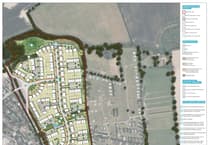
Launceston Town Council submitted three potential proposals to Cornwall Council, outlining changes to its boundaries. The first — all the Pennygillam Industrial Estate to be included within the town boundary. This will ensure that the boundary extends to a natural boundary point, whereas currently the industrial estate is across two parishes.
The second — to move the current boundary from Upper Chapel to the locally named Chapel Top Road so that it runs from the top of St Catherines Hill, Trebursye and returns on to the A30 via the eastbound slip road. This will ensure that the proposed Launceston cemetery extension will fall within the town boundary and will also provide a natural boundary point using clear ‘borders’ formed by roadways.
The third — to include the area from Cross Lanes, at the junction with A388 down Millways, along the unnamed road to join the Dutson to St Leonard’s Road down to the River Kensey at St Leonard’s within the town boundary. This proposal is again ensuring that identifiable ‘borders’ formed by roadways are used to define the boundary.
According to Launceston Town Council, there are no residential properties included in the first proposal (Pennygillam). There are 140 new houses proposed in the second (Upper Chapel); and 10 current dwellings in the third (Cross Lanes).
Launceston Town Council justified the proposed changes within its submission. For the first, the council said the inclusion of the whole of the Pennygillam Industrial Estate will mean that any confusion regarding where certain buildings within the site lie within the town, will be expelled. They believe it is practical and logical for the whole area to be included within Launceston.
The second — the Upper Chapel proposal — will see 140 new houses built and the section 106 agreement that forms part of this is to provide land for a cemetery extension.
The town council currently provides cemetery provision and space is at a premium with very few years remaining before the current site is full to capacity. The council is prepared to take on the cost of setting up and delivering the cemetery extension, but the land must be within the town boundary for the council to legitimately be able to provide the service.
For the third proposal the council says it will ensure that the parish boundary is consistent and coherent by following a recognisable boundary, in this instance using existing roadways to form the boundary.
Despite these justifications, the town council did acknowledge that in conversation and subsequent council meetings, which have involved neighbouring parishes, it was highlighted that the surrounding parishes do not support the proposals.
However, the council added that if it is not successful in achieving the boundary changes, then the most detrimental effect will be the loss of a new cemetery as the council will not be in a position to undertake all the necessary groundwork and associated running costs if the site falls outside of the town boundary.
The statement concluded that Launceston Town Council has undertaken significant steps in ensuring that devolution has not been detrimental to the town or neighbouring parishes and in addition to the ‘usual’ services offered, including public toilets, highways grass maintenance, a museum, information service and venues for hire, it has most recently taken on the provision of the library service.
Residents from the surrounding parishes would be affected most, if the changes were to be approved, as they would see a hike in their annual council tax bill.
Annually for a Band D property, Launceston residents pay a total of £222.03 to Cornwall Council for the town council proportion, which is considerably more than what residents pay to their respective parish councils. The areas affected by the proposals would be South Petherwin, where residents currently pay £24.56; St Stephens by Launceston Rural, that pay £48.10; and St Thomas the Apostle Rural, £31.10.
Understandably, residents and parish councils alike have had their own response to the proposals sent to Cornwall Council — all of which have been against the proposals.
Clerk of St Stephens by Launceston Parish Council, John Conway said: “I wish to register my council’s objection to the proposal by Launceston Town Council to grab some of our area. The proposed area has ten dwellings scattered over it. There is no housing estates on it or likely to be in the foreseeable future. Our Neighbourhood Plan, which will shortly be put to referendum, allows for the building of seven properties in the entire parish to 2030.”
“We have been advised by Cornwall planners that there is no chance of any housing estates being built on this land unless a north/south relief road is provided for Launceston. Such a road is unlikely to secure funding before 2050, if ever.”
Mr Conway also talked about the environmental issues new housing would cause to the area, adding: “The Newport area of Launceston suffers from poor air quality, failing the statutory tests, making any attempt to approve large scale building north of Launceston ultra vires as it would increase congestion and hence further exacerbate the already illegal level of air pollution.”
According to Mr Conway, the parish council had asked the residents affected in the area and the majority wanted to remain where they are.
He added: “My council has surveyed the residents of the ten dwellings under threat. Eight households replied categorically stating that they wished to remain part of our parish, one property is occupied by an elderly person (over 100 years) and did not wish to respond and the last property is empty. The survey forms are available for inspection if necessary.
“This proposal from Launceston would appear to be purely speculative and big brother flexing its muscles without any foundation in fact or reason.”
In July, South Petherwin Parish Council distributed a questionnaire to its parishioners to address the proposal, all of which responded against.
One individual wrote: “Launceston Town Council did not consult at all before deciding Pennygillam area should go to them. This includes people’s homes and they should have known and been asked about their opinions from the start. South Petherwin Parish Council have consulted parishioners, such as myself, who do not wish to lose this area to Launceston.”
Many from the South Petherwin parish agreed, saying they are happy within their own parish and did not wish to become part of Launceston.
The Community Governance Review Panel chairman Cllr Malcolm Brown explained that all the options and opinions would be weighed fairly before the final decision.
He said: “These public meetings will allow us to really start testing public opinion on the issues and ideas raised during the review so far.Many of the proposals are highly controversial. Some town councils want to expand their boundaries into surrounding rural parishes. Elsewhere there are some places where it is being argued that an existing parish should be divided so that different communities have their own council.”
But Cllr Brown said the final decision will be made to benefit all parties, adding: “The main objective of the review is to ensure that community governance arrangements work effectively in future for the benefit of all at the parish level — and we want to ensure we get it right.”
Once all of the meetings are concluded, Cornwall Council will consider the opinions it has received. At the end of this year it will publish its draft recommendations for the future and undertake a 12 week public consultation. Final decisions should be made in June 2020.
On October 2, some of the Camelford Community Network Area will be included in the Wadebridge/Padstow meeting at Shuttleworth Memorial Hall in Egloshayle. The meeting is due to start at 7pm
Comments
This article has no comments yet. Be the first to leave a comment.