
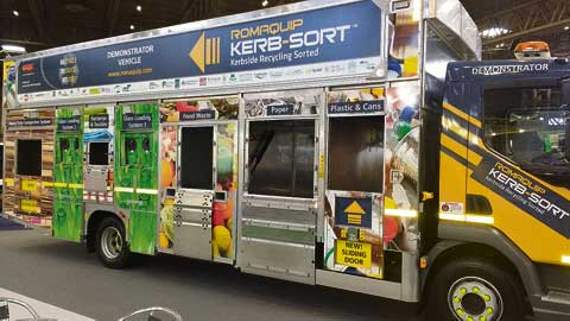
THE Neighbourhoods Overview and Scrutiny Committee at Cornwall Council has been considering recommendations to go to cabinet around the options for refuse collections from 2020 onwards.
This follows the publication by the council of parish and town recycling rates across Cornwall last month. According to the statistics, Bude recycles 28% of rubbish, whilst Launceston recycles 25% and Camelford recycles 24%.
The figures reveal an overall household recycling rate of around 25%. Even by adding the materials presented at 13 household waste and recycling centres, this figure only rises to 35%, which is well short of the national target of 50% by 2020.
This compares poorly with other local authorities and in part can be explained by the current system of only picking up recycling every other week whilst picking up unlimited black bag waste every week.


.png?width=209&height=140&crop=209:145,smart&quality=75)

A small group of five councillors from the committee have been tasked with looking into this area in depth over the last six weeks and they have been led by Liberal Democrat Cornwall Councillor Dominic Fairman, who covers St Teath, St Breward and Delabole, and is vice-chair of the committee.
Cllr Fairman said: “We have held six full inquiry days coupled with numerous briefings and site visits to inform our decision making, with many of the sessions held in public.
“We have heard from a wide range of industry experts and also strong representations from town and parish councils through their community networks.”
The recommendations follow quite closely some of the work done by the Welsh government who have succeeded over the last ten years in making Wales the best country in the UK at recycling, the second best country in Europe and with the third best rates in the whole world.
The changes due for consideration are a weekly collection of dry recycling using the current bag and box system; a weekly collection of food waste using new kitchen and kerbside containers; a move to fortnightly collection of residual (black bag) waste, and removal of the current roadside recycling banks in lay-bys and car parks.
Cllr Fairman continued: “We are confident that by adopting our recommendations we will be able to exceed the current 50% target for recycling and also provide a platform with which to work towards the likely 2030 target of 65%.
“With the removal of food waste every week along with other recyclable materials, there should be much less issue with picking up the black bags every fortnight. This is now standard practice across more than three quarters of all local authorities in England.
“By diverting the food waste away from our incinerator and by using anaerobic digestion as a method of processing, we will be not only delivering our key priority on recycling but also continuing to meet our stated environmental ambitions.”
He added: “There has been a lot of reporting across the media lately around the ever increasing blight of plastics ending up in our oceans. We all need to take responsibility for our own waste and in particular I am hopeful that by separating food waste, we can highlight to households just how much money they could save by not buying food, which simply ends up in the bin.”
The recommendations will then go to cabinet in November, which will allow plenty of time for the collection contract to go to the competitive tender, with any new collection regime starting in 2020.
Comments
This article has no comments yet. Be the first to leave a comment.