
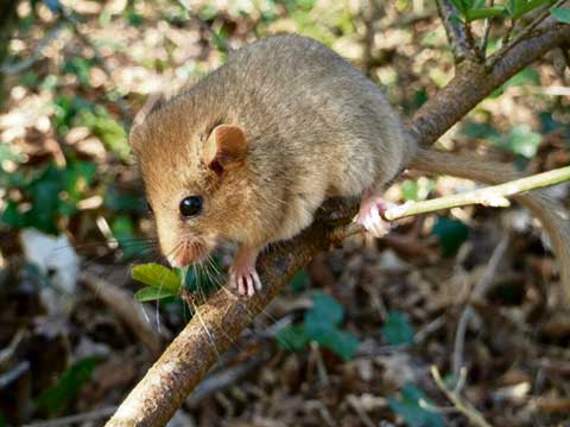
THE Bude Group of the Cornwall Wildlife Trust’s autumn season started with a fascinating talk by Jen Bousfield at Stratton Primary School on Monday, September 18, on the hazel dormouse and her study of these small nocturnal and arboreal creatures that she first discovered in 1995 in her garden.



.jpeg?width=209&height=140&crop=209:145,smart&quality=75)
Dormice are a rare and protected species and are not related to mice. Jen has undergone a lot of training and field work in order to obtain a licence to become a monitor for the National Scheme and to handle dormice where necessary.
Dormice have an overall nose to tail length of 120-170mm with a furry tail, long whiskers and big eyes. They spend roughly 60% of their lives asleep and can live three to five years in the wild. They hibernate in tiny woven nests in hollows at the base of trees and hedges, awakening around April and usually having one brood (between four and seven) a year. Hedges as wildlife corridors are very important, allowing dormice to travel safely to new areas to allow diversity in genetic breeding as well as a food source. They eat flowers and buds that contain high quality proteins and sugars as well as insects and moth caterpillars. Hazel nuts are eaten on the tree while still green and can take them 20 minutes to open as they chisel out a hole using the sides and edges of their teeth, leaving a distinctive shaved edge to the inside of the rim.
Their need for a rich, varied and balanced food source and habitat makes them an indicator species. Dormice around your garden show that the natural balance is being maintained, because if it wasn’t, they would not survive.
Comments
This article has no comments yet. Be the first to leave a comment.