

AS a child in Bodmin, Curtis Garner dreamed of being a novelist. “I didn’t know what I wanted to write about, or how to go about it,” he recalls. “At 18, I did a creative writing course in London, but I was still writing purely for me, for joy, and never imagined I would be published.”
It makes it all the more satisfying that second novel, Orange, was published in February and has already been chosen as a Best Book of 2026 by Dazed magazine and the Radio Times, the latter crediting it with “the tenderness of nuanced relationships found in Sally Rooney”.
His 2024 debut, Isaac, was equally feted; exploring the complexities of coming of age as a young, queer person in the digital age of dating apps, it was hailed “an instant queer classic” and longlisted for the 2025 Polari First Book Prize. Celebrated screenwriter Russell T Davies (Queer As Folk, It’s a Sin) described it as “so vivid and real, it brought a thousand memories rushing back”.
“I wrote Isaac mostly out of rage,” admits Curtis, 29. “It was about all the things I disliked in myself, and other gay men – the small things in gay life that no one talks about. At 17, I was impressionable and vulnerable, and wondered: what kind of book would I have liked to read? So many men messaged me afterwards to say they felt seen after reading Isaac.”


While Isaac was set in London, Orange contrasts the buzz of the big city with the picturesque fishing village of Portscatho, “one of my favourite places in the world”, and an unflinchingly honest portrait of first love and self-discovery.
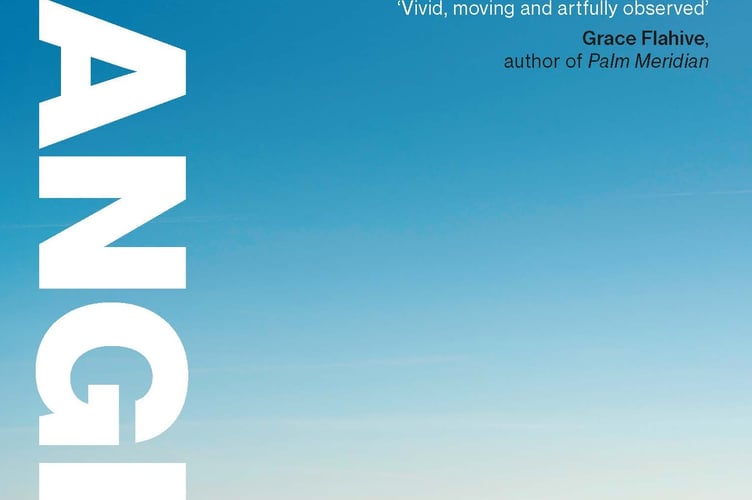
It’s 2018, and teenagers Daniel and Jago form an unexpected and transformative connection in Cornwall. Five years later, Daniel has rewritten himself in London - sharper, louder and queer in a way the city understands. But a visit from Jago stirs up a reckoning with his former life, forcing them both to question how much change their bond can withstand.
How close to Curtis’ own story is the novel? “It’s not a memoir,” he replies, then concedes: “It’s quite autobiographical. It’s a transformational time in the protagonist’s life – he’s pulled between his previous life in Cornwall and his new one in London.
“As a teen, I loved the idea of London before I even got here. I was a queer person who felt held back by living in a small town. There’s this idea that gay people leave and step off the train at Paddington, ready to conquer the world; but Orange shows no one forgets where they came from, the mix of trauma and joy it brought them. It’s not so much a love letter as complex psychological nostalgia.”
Curtis’ family were accepting of his sexuality. “There was no coming-out saga, and that doesn’t interest me in novels.” However, he struggled at school. “There was a focus on science and sport, and I was terrible at both. I loved drama and English – reading was incredibly important to me from a young age. I was never interested in the things that interested most boys – being around women gossiping was my Mecca.
“Cornwall was very heterosexual, cisgender, white and normative. There’s an element of self-surveillance growing up in a place like that. In London, no one looks at you twice, no one cares. When I moved here 11 years ago, I could be myself, dress the way I wanted to, be with boys in public spaces the way I wanted to be. Here, I can be unapologetically me.”
Curtis moved to the Big Smoke when he was 18 to study creative writing and English literature. He graduated in 2017 and has worked in publishing ever since, also receiving an MA with distinction from Manchester Writing School in 2020. In his spare time, he reviews novels on Instagram @queer_novels.
What does he miss about Cornwall? “London is also fast-paced and extremely expensive. That makes me miss Cornwall all the time. And I do have a special, nostalgic feel for home.
“I love that the history is everywhere – as a child, I was surrounded by that heritage. In Orange, I talk a lot about Cornish folklore and legend: Tristan and Iseult, the Beast of Bodmin Moor.”
Then there’s the language – Daniel’s gran’s speech is littered with Cornish dialect, and chapter headings are written in Cornish. “I had no idea until I left home how unique that was. I recently used the word ‘teasy’ and a colleague had never heard it before.”
Don’t expect Orange to be a rose-tinted view of the homeland, though. “People think Cornwall is all beaches, surfing and seafood, but that’s not the reality for the majority of people who live here,” Curtis explains. “Cornwall is the poorest county in England, and I wanted to emphasise that when you move away from the coast, Cornish people have the same struggles as people do anywhere else.”
He regularly returns to Cornwall, where his family are still based, for home cooking and peace and quiet: “I get loads of work done,” he laughs. In May, he will give talks at independent bookshops and literary festivals, including in coversation with fellow novelist Patrick Gale, who has said: “Garner is clearly one to watch.”
Curtis has clearly made his peace with the county of his birth. “Whether you live here or just visit for two weeks in August, Cornwall is a miraculous place. As a teen, I felt too big for it; now I see it as special to come from that part of the world, and I feel gratitude for that.”
Orange and Isaac are both published by VERVE Books. Curtis Garner will be speaking about Orange at Clemo Books in Newquay on Thursday, May 14, and in conversation with Patrick Gale at the Bude Literary Festival on Friday, May 15.
Comments
This article has no comments yet. Be the first to leave a comment.