
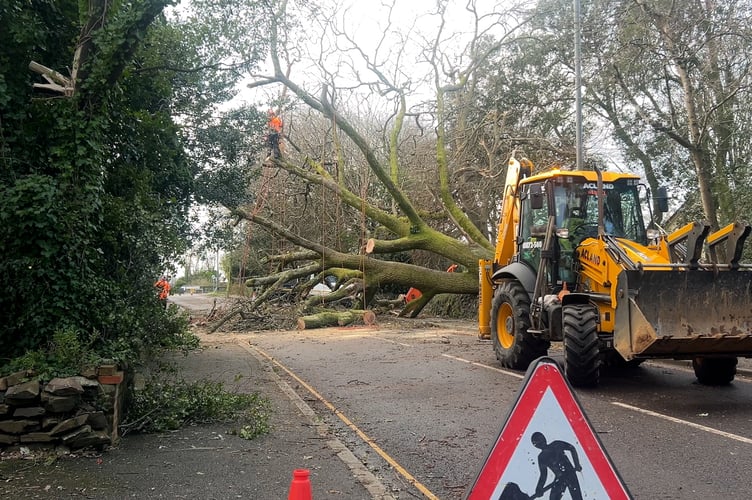
WHEN Storm Goretti laid waste to parts of rural Cornwall, it wasn’t just electricity or even water that was affected. Communities that had switched to a digital landline found themselves entirely disconnected from the outside world – and some had yet to have their phone line restored a week later.
This scenario is the result of the telecoms industry’s decision to retire analogue landlines, announced in November 2017. Most customers are expected to be migrated by the end of January 2027 to new digital technology using an internet connection, such as Voice over Internet Protocol (VoIP).
Why? Because the analogue networks we’ve relied on for decades have reached the end of their serviceable life, and the parts required to maintain or repair connections are no longer being manufactured. In addition, BT estimates more than 98 per cent of UK adults own a mobile phone, so it – and other providers – are prioritising reliable mobile signal in rural areas.
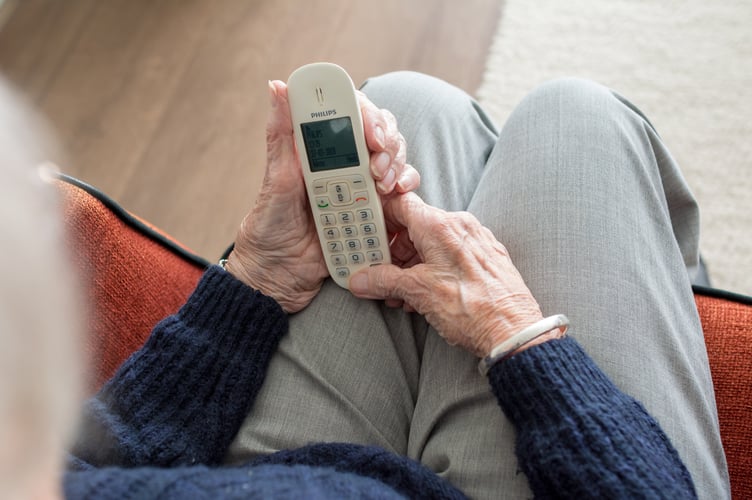
This is cold comfort to Elizabeth Dale, who lives with her parents – Leslie, 87 and Janet, 79 - at a rural property in Perranarworthal. Their power and landline went down at around 9pm on Thursday, January 8; while their power was off for five days, the earliest date for their landline to be restored was predicted at Wednesday, January 21 – five days after Elizabeth was due to depart for a long-planned two-week holiday in Mexico.
“It’s the worst time for my parents to be without a phone line,” she said. “I’m apoplectic. What are they supposed to do for six days with no landline while I’m not there?
“I understand there has been a storm and these are unusual circumstances, but it’s very clear the service isn’t up to handling this kind of disruption. My parents are isolated, and don’t use mobile phones, but there was nothing the call handler could do other than raise a complaint. What good is that?”
The family lives in the house Leslie grew up in, and were able to cook and heat the property during the power cut thanks to log fires and a coal-powered Rayburn. But Elizabeth, who deals with BT on her parents’ behalf, explains how they were persuaded to switch their copper lines for digital two years ago.
“It was sold to us on the understanding we would notice no difference between the two,” she says. “Maybe I was naïve to agree, but once they started explaining the process, I realised the line would go down during a power cut. When our power goes off, it can be for days at a time, because we’re low priority due to the small number of people in this area.
“But when I told BT it wasn’t suitable for my parents, I was told, ‘it’s happening, end of story’. Later on, I was told if we backed out, my parents would lose the phone number they’d had for decades – something they would find very upsetting.”
She feels the consequences of Storm Goretti have vindicated her concerns. “Everything I warned would happen has happened,” she said. “Clearly the system isn’t fit for purpose, so why introduce it in a rural area and to vulnerable customers for whom the landline is their lifeline?”
Elizabeth adds: “I have asked if BT will be compensating my parents and other customers for the lack of service and the stress it causes; and what mitigating measures will be put in place so that this doesn't keep happening every time we have bad weather.”
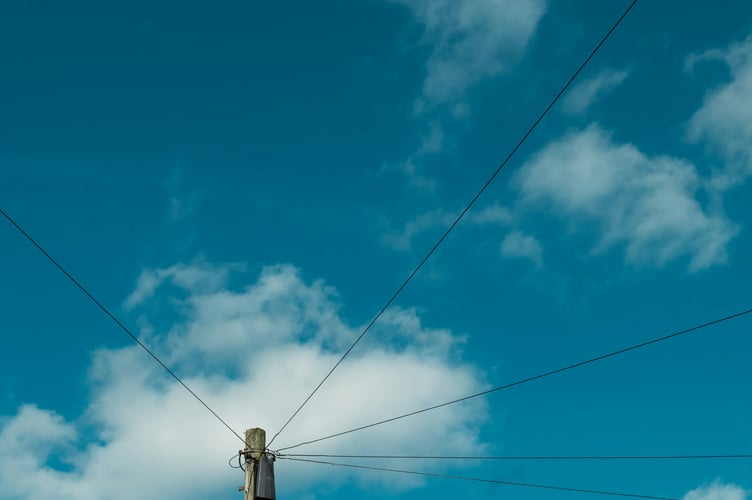
The Dales’ Cornwall councillor, Ruth Gripper (Lib Dem), said she had received many similar reports concerning digital phone lines, but that it had been difficult to ascertain how many properties were still without connection as Openreach was focused on individual queries.
“What’s particularly on my mind for the future is, when people are unconnected, how do we make sure we can reach them at times like this? There were a lot of things happening informally, but how do we link up the formal response so those people know help is coming?
“And there are questions about the digital infrastructure – we need to ensure it’s more resilient.”
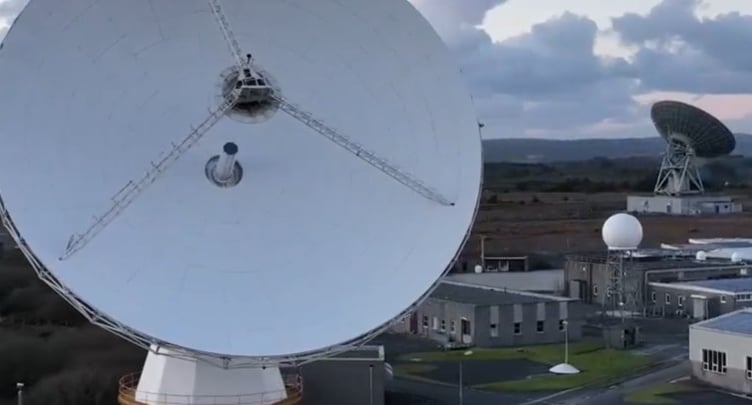
On the Lizard in Newtown St Martin, Viki Carpenter can see the giant dishes of telecommunications hub Goonhilly Earth Station from her window. “This is a strategically important place for the whole of the UK,” she says, “and yet when our power and water goes off, it’s just ‘West Cornwall where hardly anyone lives’.”
The logistics of travel and communications in such a remote area can be complex. “We’re used to power cuts – we just get the candles and the Scrabble out,” she says. “But Storm Goretti cut the roads off. Not only were trees down, but power lines were wrapped around them. It was very dangerous to go out.
“There was no mobile signal and the internet was down. Because our copper phone lines had gone, we all realised simultaneously we couldn’t get help or help others.
“In towns, you can get people back online quickly and see your neighbours easily, but it hits harder in rural areas where it can take up to an hour to reach your nearest neighbour on foot,” explains Viki, who is a founding director of accessibility advocacy organisation Access Cornwall.
After power and landlines were restored, tales of hardship emerged. These included a disabled man whose electric wheelchair ran out of charge four hours after the power went off, and was confined to his chair for two days due to the lack of electricity to work his hoist; and a young mother who was unable to sterilise her baby bottles due to a lack of water, but unaware of bottled water stations which were advertised largely online.
“The radio was a lifesaver – if you had one that was wind-up or battery operated,” says Viki. She adds: “I felt at the time that it was a terrible idea to cut off the analogue lines. Anything that relies on electricity and broadband is fragile.
“What we really need is an organised parish plan so people know if something like this happens again – and it will – there’s somewhere to go, like the village hall, where there will be a generator and information.”
Both Jayne Kirkham MP (Labour, Truro and Falmouth) and Andrew George MP (Lib Dem, St Ives) were quick to call out the distress caused to constituents by the impact on communications, and asked urgent questions in Parliament immediately after Storm Goretti.
Mr George decried “those higher authorities who turned off the previously functioning analogue telephone system, which has proven to be more resilient following these incidents than the much-vaunted digital technologies”
Ms Kirkham asked the experience of Storm Goretti could be considered “for the purpose of future back-up, perhaps through satellite communication - could we move towards that more quickly?”
She added: “The priority response services for vulnerable people rely on sign-up and the ability to contact those people. Will the Minister agree to look at that when it comes to future incidents, given that the climate is changing? This storm was incredibly ferocious and terrifying, but there are likely to be more like it."
Official guidance from the Department for Science, Innovation and Technology states: “It is the responsibility of the communications provider to ensure those who depend on a landline are provided a resilient solution that will allow customers to make calls to the emergency services in the event of a power outage.”
A BT spokesperson said: “At BT, keeping customers connected is our top priority. The UK-wide switch from analogue to digital services is a critical transformation, as the old technology is increasingly unreliable and no longer fit for purpose.
“We understand concerns about staying connected during power cuts and have measures in place to support customers with additional needs, including free battery back-up units, hybrid phones and in-home assistance …
“We encourage any customers who have questions or need support to contact us directly so we can review their setup and provide the best solution for their needs.”
Battery back-up units are available for purchase, or free for customers who have disclosed any additional needs.
“Meanwhile, more sites are getting back-up power generators and BT is working with the energy industry to ensure power is restored quickly to digital networks in the event of future storms and power outages.
An Openreach spokesperson said engineers and partners are working round the clock to get everyone back up and running as quickly as possible. "We know how frustrating it is to lose your broadband and phone services, so we’re working as fast as we can but the reality is that some repairs, like pole and overhead cable replacements, can be very complex and take more time.
"If you are experiencing disruption to your phone or broadband, please report a fault to your service provider (where possible) so they can keep you updated on repairs."
Jayne Kirkham will host a drop-in session, Continuing the Conversation on #StormGoretti, with local councillors at St Gluvias Community Hall, Penryn tomorrow [Saturday, January 17] from 5pm to 6pm. For further information, email [email protected]
Comments
This article has no comments yet. Be the first to leave a comment.