
CORNWALL Council is taking steps to become carbon neutral by 2030, a meeting in Camelford heard recently.
Mark James from Cornwall Council’s localism team, and Rob Lacey, the policy lead at Cornwall Council, attended the Camelford Community Network Panel meeting on Tuesday, January 28, where they each delivered a presentation on the steps Cornwall Council is taking to become carbon neutral by 2030, and reduce its impact on the environment.
First to address the panel was Mr James, who was to deliver a presentation on Cornwall Council’s climate action plan.
He started by saying that Cornwall Council declared a climate emergency last year, and there are ‘a number of things that means for the council as we move forward’.
 Leading councillor says Cornwall is being ‘shafted’ by Devon and Cornwall Police
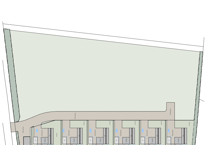 Planning: Council refuse traveller pitches over mineral access concerns
  Councils told to 'do better' as government issue verdict on the state of our roads
 Skybus has ‘hill to climb’ to build customer confidence in London flights
The meeting heard that some of the main sectors producing the highest emissions in Cornwall includes agriculture, commercial housing and transport. However, he noted that there are a number of community projects which are developing new forms of power.
Overall, Cornwall Council’s climate action plan includes influencing others through engagement, seeking funding for sustainable projects, and considering policy and planning and lobbying the government for funding and powers.
The local authority’s focus is to reduce emissions from the commercial sector, including transport and housing, and to expand on renewable energy sources, making it more resilient in the future.
Mr James explained that since the team started the action plan in July 2019, they had produced a ‘decision-making wheel’ — a coloured pie chart allowing the climate change team to consider the wider elements when making a decision on a policy. This doesn’t necessarily mean that there will be a big change on the policy put forward, but it looks at the impacts a policy might have.
The areas in which the authority can ‘directly do something about’ include funding, policy writing and influence by working with communities. They are currently focusing on projects involving geothermal energy, the Forest for Cornwall scheme, the green clean growth focus and the localism summit, which will be holding six workshops across Cornwall this year. They also aim to engage with schools and organisations.
Mr James explained more about the localism summit, with the first workshop due to take place on February 29 in Liskeard: “That invitation is to town and parish councils, volunteer sector organisations and the public. We’re not restricting access.
“Come along and explore what everyone is doing, share good ideas and put them back to Cornwall Council to see what we can do to work together.
“We’re doing this geographically around Cornwall, so we can make it more user-friendly. We’ll be going to Penzance, Truro, east Cornwall, north Cornwall and then back to Redruth and St Austell.”
Also in attendance at the meeting was Rob Lacey, leader of policy, planning and enterprise at Cornwall Council, who delivered a presentation on climate change, the council’s aim to become carbon neutral by 2030 and the role of planning and local councils.
He started by explaining that in July 2019, cabinet asked Mr Lacey’s team to start putting together a climate change document, with the development of the 5050 strategy also taking place.
Mr Lacey said the document they are producing is ‘very ambitious’: “The document will have to go through examination and will run through to 2030. This is very much a first step.”
He said that planning can ‘have a direct impact’ and that his team are looking at what they need to improve to be in line with Cornwall Council’s declaration of a climate emergency and ‘be able to help enhance the existing local plan’.
The meeting heard that there are three statutory stages to consider: the scoping stage, to find out what the content (of the document) should be; the pre-submission stage, which will take place in August; and the full submission of the document in January/February (2021).
At this stage, the content is being introduced to community network panels, Mr Lacey said, and the likely content of the document will include renewables, energy efficiency and coastal change/flooding measures.
Cornwall Council’s ambitions include increasing renewable energy supplies and identifying sites that are suitable for wind (power).
Mr Lacey said the authority wants to have discussions with local councils, and ‘maximise the opportunities for re-powering’.
Once the agenda items had been covered during the network panel meeting, chair of the panel, Cllr Claire Hewlett, opened the floor to the public in attendance with a question and answer session for the panel’s guests.
One member of the public asked about ‘climate resilient landscapes’, referring to the Forest for Cornwall scheme, and said: “What would this mean for this area and how different will this be from the area now?”
Mr James responded and said: “The Forest for Cornwall is not just a hectare covered in trees, because that’s not actually viable. It’s an addition to lots of things, so lots of trees, Cornish hedgerows, etcetera. The look of things will change, but not drastically — it will be much more of a gradual process, and that will also be up to what the community wants.”
Cornwall Council’s vision for the Forest for Cornwall includes approximately 8,000 hectares to ‘increase all forms of canopy cover throughout Cornwall’, while protecting and strengthening the county’s existing trees, hedgerows and woodlands.
Another member of the public was keen to find out more about local food production. She said that food grown in Cornwall is often transported to other parts of the country before making its way onto the shelves: “There was some mention of food. What can be done about keeping food that is grown in Cornwall to stay in Cornwall?”
Responding, Mr James said: “Within the wider partnership world, we will have this conversation and say to them, why don’t we try and change that?”
The local lady also asked: “Could anything be done to process food into ready meals locally, or does that need the private sector to come forward?”
Mr James said: “That’s the conundrum. You could say to people ‘you must do this’, but who is going to react positively to being told what to do? It’s a dilemma that we have to work together on to achieve.”
Another member of the public asked about building regulations, to which Mr Lacey explained that the Future Home Standard for 2025 requires an 85% improvement on the existing regulations. He said it is based on carbon reductions by either 20% or 31%.
Camelford town councillor Andy Shaw said that ‘affordable’ housing is being made unaffordable by high insulation, and asked Mr Lacey how Cornwall Council would be addressing that.
Mr Lacey said that ‘it costs less to run (a home) if it is well insulated’: “One of the key points — we have to have a high standard of buildings across the whole country. We’ve got a perverse system at the moment which removes that investment in technology.
“We want to make sure we have a balance, but there’s not a point of building cheap houses that are expensive to run.”
Both Mr Lacey and Mr James pointed out the importance of lobbying central government for funding.
Cornwall Councillor for Delabole, St Teath and St Breward, Dominic Fairman, said the council’s current pie chart could be seen as misleading as it does not portray how far the county has come with different projects and becoming more environmentally conscious. He said: “I have seen the pie chart a couple of times now. Agriculture is never going to get to zero, but it (the chart) doesn’t show, firstly, the scale of the climate change problem and, secondly, what progress we’ve made. I would prefer to see a bar chart — it would be interesting to see.
“I don’t want to lose sight of the seriousness of the problem.”
Mr James agreed, and said Cornwall has ‘made significant inroads’ in the face of the climate emergency.
For more information on the climate action plan, visit www.cornwall.gov.uk/environment-and-planning/climate-emergency/
Comments
This article has no comments yet. Be the first to leave a comment.