
IN a new initiative, the first concert of the 69th season of Bude Music Society, held at St Martin’s, Killerton Road, began with a performance by a talented young local player — Julie Blackburn (violin).
Playing a dramatic piece named Resignation, she showed sensitivity in the shaping of the phrases, backed up with sound technique, confident interpretation and well rounded, full tone.
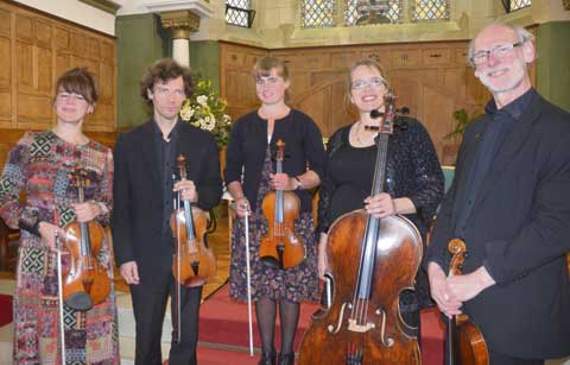
The world renowned Fitzwilliam String Quartet provided the remainder of the programme. Formed originally in 1968, one member of the first group still remains —Alan George (viola).
The quartet was making a return visit to Bude and Alan also has previous associations with the area, having been born in Truro, growing up in Newquay and going to school in Launceston.



Others playing are Lucy Russell (violin), Marcus Barcham-Stevens (violin) and Heather Tuach (cello).
They performed three Russian quartets — the group had a close connection with Shostakovich during the later years of his life and played a major role in promoting his quartets after his death.
The 3rd, F major, was placed in the middle of the programme. Written after World War Two, it takes the audience from pre-war peace and calm, through unrest and anticipation into the full turmoil of war, sorrow for the dead and the final ‘Why?’
They opened with Tchaikovsky’s B flat major, almost one seamless movement with Adagios bracketing the lively Allegro. Each instrument is given a flourishing cadenza and the lyrical Russian melody is developed into a fugue.
The well-known Borodin No.2 in D major completed the programme — audiences were almost tempted to sing along with these indulgent melodies, which were thoughtfully presented by each instrument in turn.
There were the faintest pianissimi, furious fortissimi, breathtaking tempi and yet they always maintained complete control of the ensemble.
String quartets are said to be like conversations, each has a chance to speak, but none drowns out the words of the others and all listen intently.
The audience were privileged to hear these discussions and the nuance of the dynamics and accentuation made them speak as one.
Whether it was the lyrical, romantic style of Tchaikovsky, the frustration and fury of Shostakovich or the wallowing sentimentalism of Borodin’s melodies, there were no problems and this was a concert experience to retain in the memory for a long time.