
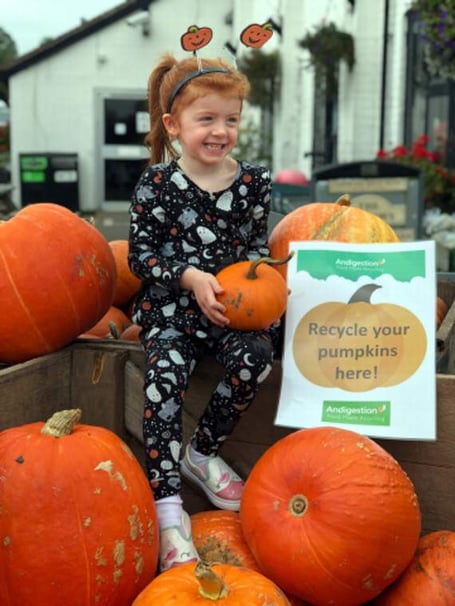
RECORD numbers of primary schools in Devon and Cornwall have again rushed to take part in the annual Hallowe’en pumpkin recycling project run by Andigestion based in Holsworthy.
An increasing number of teachers and children alike have recognised the growing importance of food waste recycling and are keen to take part in this initiative.
So far, nine schools have signed up to take part — including Holsworthy, Bradford and Stratton primary schools — a 350% increase over last year which, according to commercial and logistics executive at Andigestion Gareth Williams, underlines the growing interest in sustainability and green issues.
Pupils are being encouraged to return their waste Hallowe’en pumpkins to specially designated recycling points at each school — a move which both raises awareness of food waste recycling and helps reduce the amount of food that the county sends to landfill. Devon-based Andigestion is also supporting schools with information leaflets for every pupil plus a pumpkin colouring competition for Key Stage 1 pupils, and a themed word search competition for Key Stage 2.


Gareth said: “An estimated ten-million pumpkins will be bought in the UK in the run up to Hallowe’en. Of these, around 95% will be used to decorate gardens and doorsteps and while they look great on the night, they can then create a lot of waste which could potentially end up in landfill.
“We’ve been delighted with the response this year and hugely encouraged by the fact that so many schools see food waste recycling as a very relevant and topical issue to discuss with pupils. Food waste recycling is of course important all year round but Hallowe’en is a great opportunity to help children understand what happens to their scraps and leftovers.”
The waste pumpkins will be processed at the company’s recycling plant in Holsworthy, which recycles up to 76,000 tonnes of the south west’s household and commercial food waste each year. Through its anaerobic digestion process, the plant contributes clean, green and eco-friendly energy to around 10,000 local homes by producing electricity which is fed into the national grid. The by-product of the process — a mineral-rich, liquid fertiliser — is used by local farmers as a sustainable alternative to carbon-intensive chemical fertilisers.
Gareth said: “Not many people realise that the food waste from our plates contributes to the creation of such an environmentally-friendly and sustainable fuel!
“Creating renewable energy from food waste instead of sending it to landfill is a positive and beneficial outcome for everyone.
“Leftover pumpkins are of course a welcome addition to compost heaps or they can be left in household food waste caddies for collection by the council, but our recycling scheme is designed to help residents dispose of them easily in a really eco-friendly way.
“Our special de-packaging machine means that even leftover pumpkins in plastic bags can be recycled making it a quick, easy, clean and eco-friendly end for all those petrifying pumpkins and spooky squashes!”
Comments
This article has no comments yet. Be the first to leave a comment.