
AN ENVIRONMENTAL campaigner from Bude has warned that the world could see a ‘potentially catastrophic chain of plastic’ if action is not taken.
Deb Rosser, from Bude, has expressed her delight in the government’s recent announcement to end the production of microbeads in cosmetic products such as shower gels, face scrubs and tooth pastes, an initiative which has also been welcomed by Conservative MP for North Cornwall, Scott Mann.
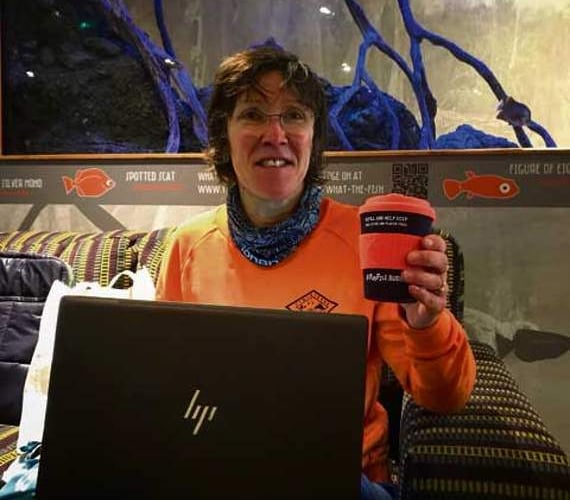
Deb, who is the creator of the campaign ReFILL, which started in Bude but has now gone national, has seen first-hand the devastating effects that plastic pollution has on the environment and marine life.
Since she moved to Bude from Essex just under ten years ago, Deb took it upon herself to help keep her local beach at Crooklets tidy, and with the help of Keep Britain Tidy’s BeachCare officer for the South West, Neil Hembrow, a new beach clean group was born — otherwise known as CR*P. This group is now one of the longest serving beach clean groups in the country.




Speaking about the ban on production of microbeads, Deb told the Post: “This is absolutely fantastic. Nobody sees it or realises the effect these tiny pieces of plastic have on the environment. Every day shower gels and toiletry items do contain plastic, which go into the fish and we end up consuming it, so it’s turning into a very vicious cycle. We will end up having a potentially catastrophic chain of plastic if we don’t do something.
“However, I welcome anything and any consultations in regards to tackling this problem. I hope all manufacturers take this on, including supermarkets and retailers across the country. We’ve got to start there, and we do hope that the government puts pressure on these manufacturers.”
Mr Mann, Conservative MP for North Cornwall, has described the ban as ‘one of the toughest in the world’ and has welcomed the initiative.
He said: “Microbeads can do great harm to our marine environment and this ban means that manufacturers of cosmetics and personal care products will no longer be able to add tiny pieces of plastic to products such as face scrubs, toothpastes and shower gels.”
A ban on the sale of products containing microbeads will follow later in the year. These damaging beads can cause serious harm to marine life, but the UK’s ban will help to stop billions of microbeads ending up in the ocean every year.
Alongside the government’s 5p plastic bag charge — which has taken nine billion bags out of circulation — the government said the ‘ban puts the UK at the forefront of international efforts to crack down on plastic pollution’.
Environment Minister, Therese Coffey, said: “The world’s seas and oceans are some of our most valuable assets and I am determined we act now to tackle the plastic that devastates our precious marine life.
“Microbeads are entirely unnecessary when there are so many natural alternatives available, and I am delighted that cosmetics manufacturers will no longer be able to add this harmful plastic to their rinse-off products. Now we have reached this important milestone, we will explore how we can build on our world-leading ban and tackle other forms of plastic waste.”
Dr Sue Kinsey, senior pollution officer at the Marine Conservation Society, said: “We are delighted that such a robust microbead ban has come into force. This is the strongest and most comprehensive ban to be enacted in the world and will help to stem the flow of micro plastics into our oceans.
“We believe that this signals a real commitment on the part of this government to clean up our seas and beaches, and hope this is a first step on this road before we see further actions to combat plastic waste.
“(The) announcement comes ahead of the government’s upcoming 25-Year Environment Plan, which will set out how we will be the first generation to leave the environment in a better state that we inherited it and create clean, healthy and productive oceans.”
Avril Sainsbury, from Bude Cleaner Seas Project, was delighted with the news, adding that the initiative is ‘a very positive step in the right direction’.
She said: “The ban on microbeads in cosmetics and personal care is good news, and a step in the right direction, but this now needs to be extended to other items such as cleaning products.
“Consumers looking to avoid microbeads in the meantime should avoid products containing polyethylene (PE), polypropylene (PP), polyethylene terephthalate (PET), polymethyl methacrylate (PMMA), polytetrafluorethylene (PTFE) and nylon. Look for products that use natural exfoliants such as natural oats, ground almonds, Jojoba beads, salt, dairy, ground coffee, lemons and sugar as a few examples.”
Comments
This article has no comments yet. Be the first to leave a comment.