
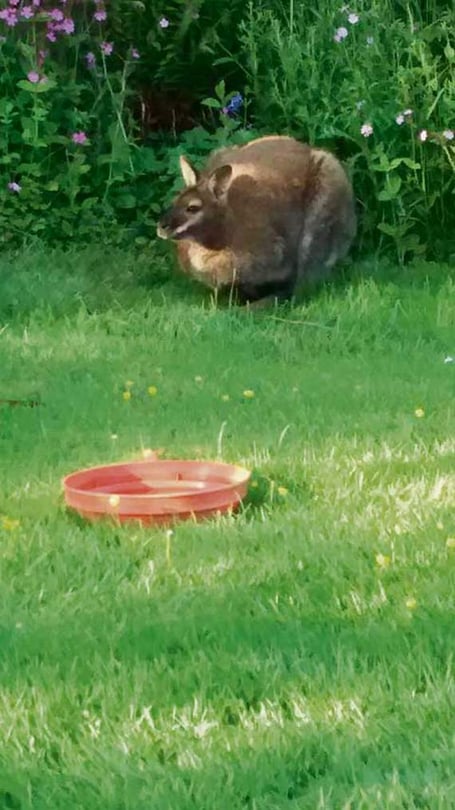
THE RSPCA has issued advice following another recent sighting of a wallaby in the South Petherwin area last week.
A wallaby was first spotted in the area in May, and a RSPCA animal collection officer tried to trap it, but was outwitted.
A man took to Facebook last week with a video of another sighting of a wallaby in the early hours of Wednesday, July 5.
Asked if there had been more sightings reported to the RSPCA, a spokesperson said they have not had any further reports recently, but said what someone should do if they see a wallaby.


.png?width=209&height=140&crop=209:145,smart&quality=75)
““If you see a wallaby in the wild then just watch from afar, enjoy the unusual sight and leave the animal alone.
“If anyone has concerns for the animal’s welfare, such as it appears to be sick, injured or trapped, please call the RSPCA on 0300 1234 999.
“Most people are probably unaware that wallabies are considered established in the wild in Britain although, under The Wildlife and Countryside Act 1981, it is illegal to release red-necked wallabies into the wild — unless under licence — as they are a non-native species to Britain.
“Wallabies became established in the wild in England during the early 20th century; the product of both deliberate releases and accidental escapes from captivity.
“Overall, the feral population of red-necked wallabies in Britain is declining so it is becoming less common to see them in the wild. A few localised populations exist — near Loch Lomond in Scotland and on the Isle of Man — it’s thought that a third population in the Peak District population may now be extinct. Other feral populations have been recorded, usually local escapees, but these are now also thought to be extinct.
“There is a free ranging colony at Whipsnade Park, Bedfordshire.
“Red-necked wallabies are particularly vulnerable to harsh winters, especially severe snow falls. They are also subject to disturbance from human activities and road accidents are a significant cause of death.”
Comments
This article has no comments yet. Be the first to leave a comment.